
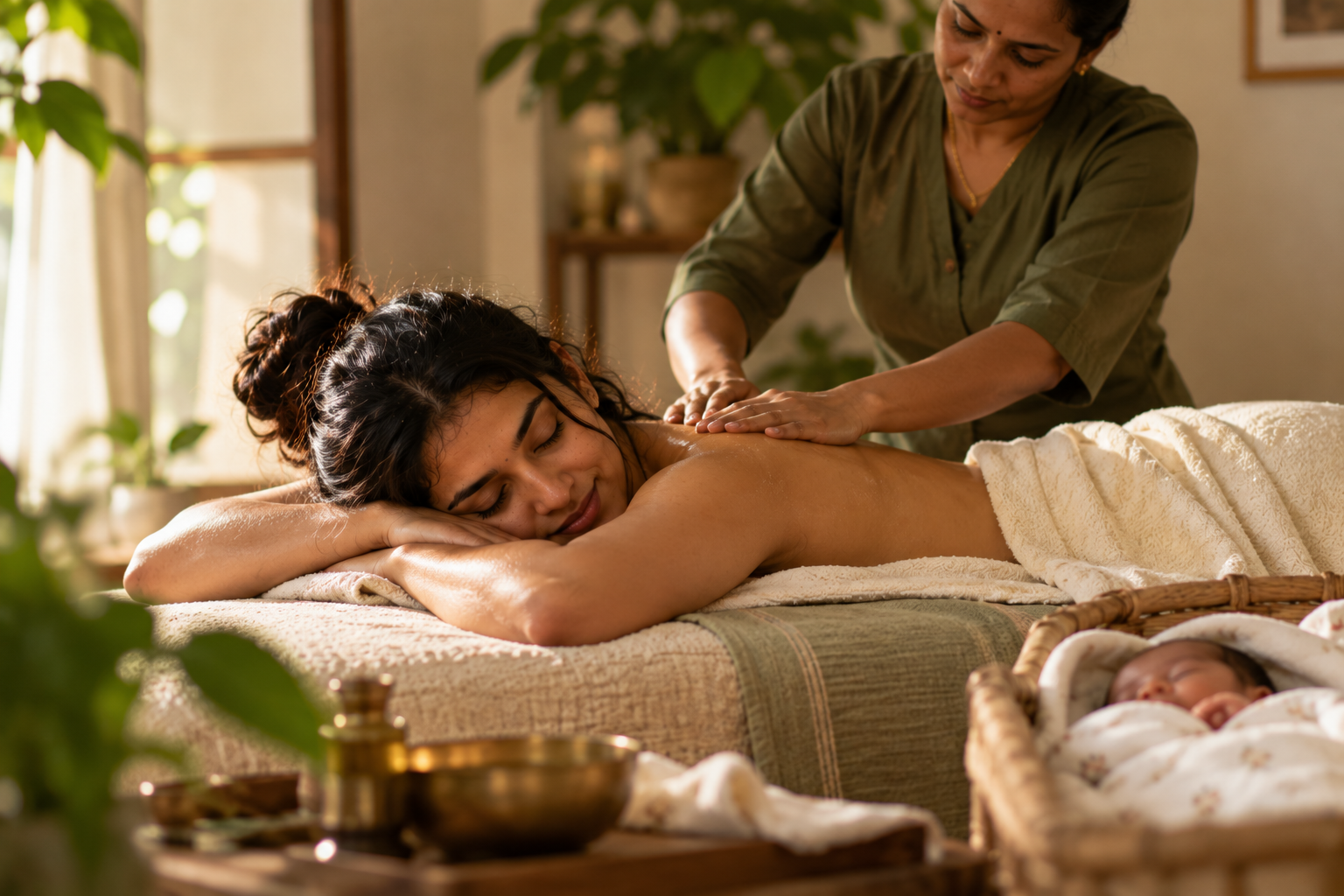
The weeks after childbirth can be physically demanding.
Your body has just been through pregnancy and delivery. At the same time, you may be carrying your baby throughout the day, breastfeeding frequently and sleeping in short stretches. As a result, aches, stiffness and tiredness can become part of everyday life.
This is where postnatal massage can become a useful part of a mother’s postpartum care routine.
Postnatal massage is a gentle form of massage designed for women after childbirth. Unlike a regular massage, the therapist needs to consider the mother’s delivery, recovery, comfort and overall health before beginning.
For example, a mother who has had a normal vaginal delivery may have very different needs from someone recovering from a C-section.
Therefore, good postnatal massage should never follow exactly the same routine for every woman.
The mother comes first.
At a Glance
In this guide, we’ll cover:
- What postnatal massage involves
- Why mothers choose massage after childbirth
- Potential benefits of postnatal massage
- When you can consider massage after a vaginal delivery
- What changes after a C-section
- Which areas need special care
- Ayurvedic postnatal massage and traditional Indian practices
- Oils commonly used for postnatal massage
- When you should postpone a massage
- How to choose a postnatal massage therapist
- What to expect from a home-based session
- Frequently asked questions about postnatal massage
Why Do Mothers Choose Postnatal Massage?
In India, massage has been part of postpartum traditions for generations.
Many families have a grandmother, mother or experienced caregiver who knows how she believes a new mother should be looked after.
For some women, that tradition continues naturally. Others choose professional postnatal massage because family members may not live nearby or because they prefer trained support.
A new mother may choose massage for several reasons, including:
- Relaxation and personal time
- General muscle comfort
- Gentle care after childbirth
- Support while adjusting to breastfeeding
- Relief from the physical strain of carrying the baby
- A familiar part of traditional postpartum care
- Professional care without leaving home
However, it is important to keep expectations realistic.
Massage can provide relaxation and comfort for some mothers. It should not replace medical treatment or be presented as a solution for every postpartum problem.
What Are the Potential Benefits of Postnatal Massage?
1. It Can Help You Relax
This may sound like a small benefit. However, for a new mother, it can mean a lot.
The early weeks often involve feeding, interrupted sleep, visitors and household responsibilities. Consequently, finding even a little time to relax can become difficult.
A quiet session where someone else takes care of you can therefore feel especially valuable.
2. It May Help With Muscle Discomfort
Pregnancy and newborn care can place additional strain on your back, shoulders, neck and legs.
For example, breastfeeding positions and repeatedly carrying your baby can leave certain muscles feeling tense.
A gentle massage may help some women feel more comfortable and relaxed.
3. It Can Become Part of Your Recovery Routine
Postpartum recovery involves much more than medical check-ups.
Your body also needs adequate nutrition, rest, movement and emotional support. In addition, you may need practical help with everyday tasks.
For some mothers, massage becomes one small part of this wider recovery routine.
4. It Gives the Mother Time to Be Cared For
New mothers spend much of their day caring for someone else.
Therefore, having someone focus on their comfort can feel meaningful.
Postnatal massage does not need to be about achieving a particular physical result. Sometimes, simply having a safe and comfortable space to rest is valuable.
When Can You Start Postnatal Massage?
This is one of the most common questions new mothers ask.
You may hear different answers from different people.
Some people recommend starting after seven days. Others suggest waiting several weeks.
However, postpartum recovery does not follow one fixed timeline.
The appropriate timing depends on factors such as:
- Your type of delivery
- Any complications during or after delivery
- Stitches or wounds
- Postpartum bleeding
- Your current pain or discomfort
- C-section recovery
- Your overall health
- Advice from your healthcare provider
A mother recovering normally may be able to consider gentle massage earlier than another mother who has experienced complications.
Therefore, it is better to assess the individual mother instead of following one fixed rule.
Postnatal Massage After a Vaginal Delivery
A vaginal delivery can leave you with soreness, fatigue, stitches or pelvic discomfort.
For that reason, your massage should match your stage of recovery.
A therapist may focus on areas such as:
- Back
- Shoulders
- Arms
- Legs
- Feet
The therapist should take extra care around the abdomen and pelvic area, especially during the early recovery period.
Meanwhile, the mother should always feel comfortable communicating during the session.
If something hurts, she should be able to ask the therapist to stop or change the technique.
If you experience heavy bleeding, fever, significant pain or another concerning symptom, seek medical advice rather than relying on massage.
What About Postnatal Massage After a C-Section?
C-section recovery requires additional care because the procedure involves abdominal surgery.
As a result, the massage approach needs to change.
A therapist should not simply use the same routine they would use after a vaginal delivery.
Instead, they should consider the healing incision and your overall recovery before starting.
Depending on your stage of recovery, the therapist may work on areas away from the surgical site, such as the:
- Back
- Shoulders
- Arms
- Legs
- Feet
The incision itself should not receive forceful massage.
Furthermore, any scar massage or work around the surgical area should follow appropriate medical guidance.
If you have had a C-section, discuss your recovery with your healthcare provider before beginning massage, particularly if you have any concerns about the wound.
What Happens During a Postnatal Massage?
A good postnatal massage session should begin with a conversation.
Before starting, the therapist should understand your:
- Type of delivery
- Current stage of recovery
- Areas of discomfort
- Relevant medical history
- Comfort level
- Any restrictions given by your healthcare provider
After that, the therapist can adapt the session accordingly.
You should also be able to communicate throughout the massage.
For example, you can ask for lighter pressure if the massage feels uncomfortable. Similarly, you can ask the therapist to avoid a particular area.
The goal is not to see how much pressure you can tolerate.
Postnatal massage should feel supportive, comfortable and appropriate for your recovery.
Which Oils Are Used for Postnatal Massage?
Oil massage forms an important part of traditional Indian postpartum care.
Depending on the therapist and the type of care being provided, you may come across:
- Sesame oil
- Coconut oil
- Herbal oils
- Ayurvedic oil preparations
The right choice can vary from person to person.
For instance, your skin type, allergies and personal preferences may influence which oil works best for you.
If you have sensitive skin or a history of skin reactions, tell the therapist before the session.
Also, if the therapist uses a specific Ayurvedic preparation, you can ask about its ingredients.
What Is Ayurvedic Postnatal Massage?
Ayurvedic postpartum care traditionally includes an approach known as Sutika Paricharya.
Massage represents only one part of this broader traditional approach.
Depending on the tradition followed, postpartum care may also include attention to:
- Diet
- Rest
- Daily routine
- Warmth
- Traditional preparations
- Gentle supportive therapies
For many Indian families, these practices remain an important part of postpartum care.
At the same time, traditional practices need to fit the mother’s current medical situation.
For example, a mother recovering from a C-section or dealing with an infection may have specific restrictions.
Therefore, traditional postpartum care should complement appropriate medical care rather than replace it.
When Should You Postpone Postnatal Massage?
Massage isn’t suitable for every mother at every stage of recovery.
You may need to postpone a session if you have:
- Fever or signs of infection
- Heavy or unusual bleeding
- Significant unexplained pain
- Problems with a healing wound
- Concerns about a C-section incision
- Severe swelling
- A medical complication that requires treatment
If you’re unsure whether massage is appropriate, speak with your doctor or another qualified healthcare professional first.
A responsible therapist should also be comfortable telling you to wait when necessary.
Good postpartum care knows when not to massage.
Can Postnatal Massage Help With Breastfeeding?
Breast massage is different from a general postnatal body massage.
Some mothers may explore breast massage as part of breastfeeding support. However, persistent pain or other symptoms require proper assessment.
For example, seek medical or lactation support if you experience:
- Severe breast pain
- A painful lump
- Fever
- Redness
- Suspected mastitis
- Persistent breastfeeding difficulties
Massage should not replace appropriate medical or lactation care.
Postnatal Massage at Home: Is It Worth Considering?
Leaving home with a newborn can be difficult.
You may need to feed the baby before leaving. You may also need to carry extra supplies, arrange transport and plan around the baby’s sleep.
For that reason, postnatal massage at home can be a practical option for many mothers.
You can stay in a familiar environment and rest immediately after the session. In addition, you don’t have to spend time travelling across the city while recovering.
However, convenience should not be the only consideration.
The experience and approach of the therapist matter just as much.
How to Choose a Postnatal Massage Therapist
Choosing the right therapist deserves some attention.
Before booking a session, ask a few simple questions.
How Much Experience Do They Have With Postpartum Mothers?
General massage experience does not automatically mean someone has experience with postpartum care.
Ask specifically about their experience working with new mothers.
Do They Understand C-Section Recovery?
If you’ve had a C-section, ask how they modify the massage.
A good therapist should understand that surgical recovery requires additional care.
Do They Understand Mother and Baby Care?
If the therapist provides broader postpartum support, ask about their training and experience.
This can help you understand what kind of support they can actually provide.
Do They Ask About Your Recovery?
A therapist should not simply arrive and start the massage.
Instead, they should first ask about your delivery, recovery and current comfort level.
Are They Comfortable Modifying the Session?
Every mother recovers differently.
Therefore, the therapist should be willing to adjust the pressure, positioning and areas of focus.
Do They Know When to Refer You to a Doctor?
This is particularly important.
A responsible therapist should recognise when a symptom falls outside the scope of massage care.
In such situations, they should encourage you to seek medical advice.
Why Home-Based Postnatal Care Can Help
Postpartum care isn’t only about massage.
Sometimes, a mother simply needs someone experienced around her who understands what recovery after childbirth actually involves.
She may need help getting comfortable.
She may need a few minutes to rest.
The baby may wake up halfway through the session.
That’s completely normal.
A good home-care experience should accommodate these realities rather than make the mother feel like she is disrupting the appointment.
Postnatal Massage With SutikaHome
At SutikaHome, we see postnatal massage as one part of a broader postpartum-care experience.
Our approach focuses on the mother rather than following one fixed routine.
Before care begins, factors such as your:
- Type of delivery
- Stage of recovery
- Comfort level
- Areas of discomfort
- Medical considerations
- Personal preferences
can help shape the experience.
Our aim is to bring the familiarity of traditional Ayurvedic postpartum care into a thoughtful, personalised home-care experience.
Most importantly, you shouldn’t have to travel across Bangalore while recovering from childbirth simply to receive care.
Sometimes, care should come to you.
Frequently Asked Questions About Postnatal Massage
Is postnatal massage good after delivery?
Postnatal massage can provide relaxation and comfort for some mothers. However, the approach should match the mother’s delivery, recovery and individual circumstances.
How soon after delivery can I get a postnatal massage?
There isn’t one starting day that works for every mother.
Your delivery, recovery, wounds, bleeding, health and medical advice should all be considered before starting.
Can I have a massage after a C-section?
You may be able to have massage during C-section recovery, but the therapist should modify the session appropriately.
In particular, the surgical area requires special care and should not receive forceful manipulation.
Can postnatal massage be done at home?
Yes. Home-based massage allows mothers to receive care without travelling while they recover.
It can also make it easier to rest immediately after the session.
What oil is best for postnatal massage?
There isn’t one oil that works best for every mother.
Sesame oil, coconut oil and various Ayurvedic oils are commonly used. However, your skin sensitivity, allergies and personal preferences should also guide the choice.
Does postnatal massage reduce belly fat?
Massage should not be presented as a weight-loss treatment.
Your body changes naturally after pregnancy, and postpartum recovery involves several factors, including nutrition, movement, sleep and time.
How often should I have postnatal massage?
There isn’t a universally recommended frequency for every mother.
Instead, the frequency can depend on your recovery, comfort and the type of postpartum care you receive.
The Best Postnatal Massage Starts With Listening
New mothers receive a lot of advice.
“Massage every day.”
“Don’t massage yet.”
“Use this oil.”
“Use that oil.”
“Start after seven days.”
“Wait forty days.”
With so much advice around you, it can become difficult to know what actually applies to you.
The reality is that your postpartum recovery is individual.
A good postnatal massage should not simply follow a rigid routine because “that’s how it has always been done.”
Instead, it should consider where you are in your recovery and what your body needs at that point.
Most importantly, you deserve care too.
After spending nine months caring for your baby before birth, it’s okay to let someone care for you too.
Leave a Reply