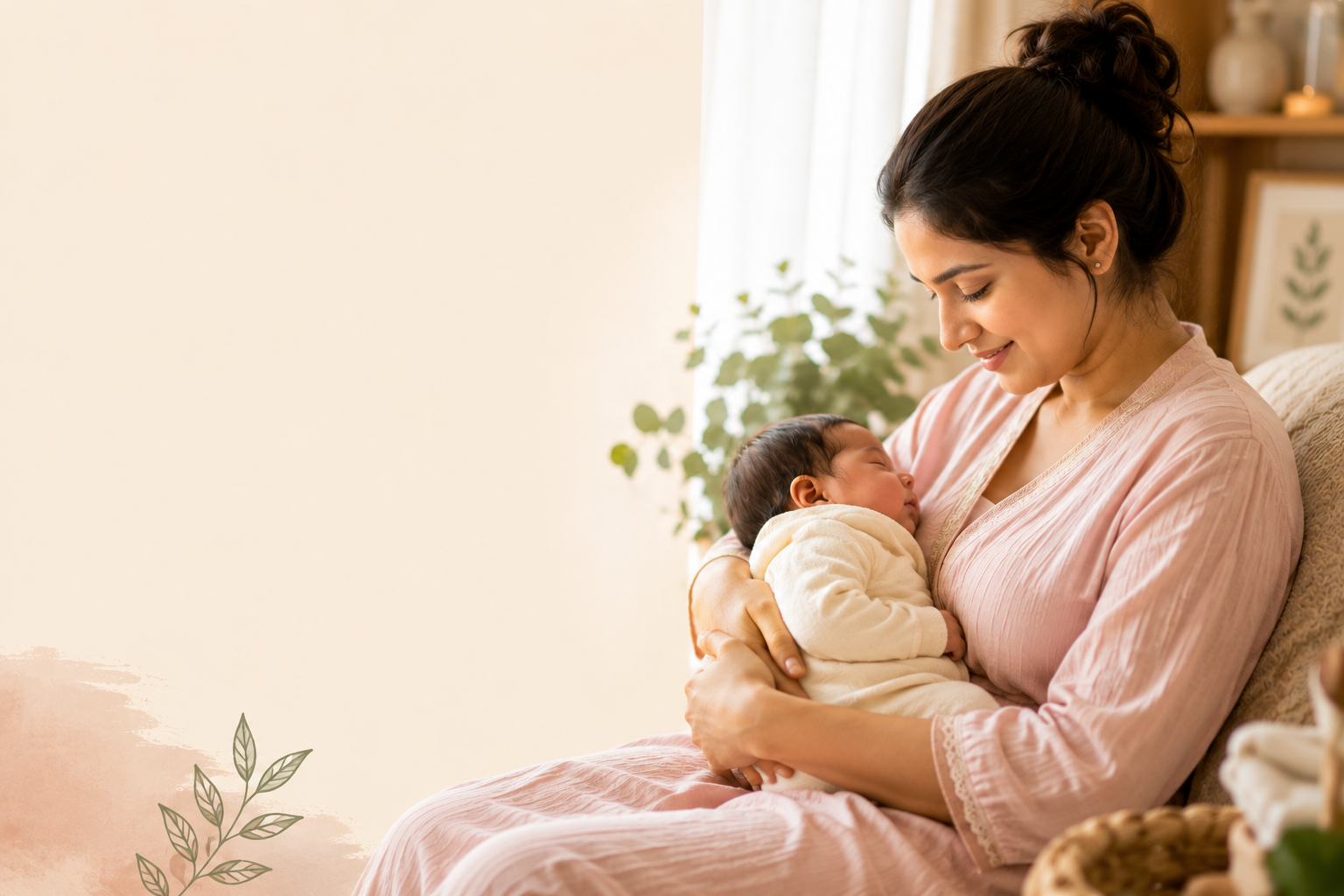
The baby has now arrived and everybody is asking questions about it. But how are you getting on?
Your body doesn’t go back to normal simply because the baby has been born after several months of pregnancy and labour.
A new major transition is underway.
The uterus begins to shrink, there are dramatic changes in your hormones, milk starts to be produced by your breasts, and your abdominal and pelvic muscles start to recover. You might be bleeding, feel sore, be tired, have constipation or simply be unsure as to why you don’t feel like yourself yet.
If you’ve had a C-section, you’ll be recovering from major abdominal surgery at the same time.
That’s why care after giving birth is important.
The period weeks after giving birth is not something you are meant to just get on with; it should be a time during which you rest, are well nourished, are monitored, receive emotional support and recover slowly.
The World Health Organization regards the first six weeks following birth as a significant period for the health and well-being of both the mother and the baby.
This is what you might go through on that journey.
The first 24 hours
On the first day you focus on observation, recovery and adjustment.
Your healthcare providers could keep an eye on your blood pressure, temperature, amount of bleeding and overall recovery. After you’ve given birth your uterus starts to contract and shrink, and you’ll probably feel cramping, especially when you’re breastfeeding.
You may also feel surprisingly emotional.
You’ve just experienced pregnancy and childbirth and are now faced with a baby who requires your constant attention. The fact that you feel overwhelmed or tired does not mean that you’re doing anything wrong.
It is important for a baby to have feeding, to be kept warm, to have skin-to-skin contact and to be monitored as part of early postnatal care.
Rest is just as important for you.
Days 2–7: When reality begins to set in
It is at this point that many new mothers become aware of just how much their bodies have undergone.
You may experience:
- Vaginal bleeding, called lochia
- Perineal soreness after a vaginal delivery
- Abdominal pain or discomfort after a C-section
- Breast fullness or tenderness
- Difficulty finding a comfortable feeding position
- Constipation or gas
- Back and shoulder discomfort
- Extreme tiredness
- Emotional ups and downs
You will also receive a great deal of advice from your relatives.
“Eat this.”
“Don’t eat that.”
“Start massage immediately.”
“Don’t move too much.”
It should have flattened out by this point.
That’s where things may become confusing.
Although traditional postpartum practices can be meaningful and reassuring, they should be adjusted to fit the mother’s own recovery rather than be carried out without thought.
A mother who has had a simple vaginal delivery is not in the same position as one who has had a c-section.
Nor is the recovery of one mother necessarily taking place at the same rate as that of another mother.
Week 2: Your body is still healing
By two weeks after giving birth you might be feeling better than you had when you were in the first few days — but you are still deep in your recovery.
The uterus will still get smaller, and your abdominal wall and pelvic floor will start to recover gradually. Your sleep is most likely still interrupted since the newbaby has to be looked after frequently.
You may find yourself asking:
Why am I still feeling so tired?
Since your body is carrying out a great deal of work.
You are experiencing recovery from giving birth and may be needed to breastfeed continuously, with only short periods of sleep.
It isn’t the right moment to compare yourself with some other mother.
A number of women experience a quick increase in physical strength whilst others take a great deal of time.
It is possible for both experiences to be normal.
Weeks 3–4: Small improvements start adding up
At this point, a large number of women start to notice minor changes.
You’ll find it easier to move about, the pain might decrease, bleeding could slowly alter, and you’ll start to feel more at ease with carrying out the routine for your baby.
Yet the process of recovering is not straight-forward.
It is possible to have a good day and then another day on which you feel utterly exhausted.
It doesn’t necessarily indicate that you’ve moved backward.
Your body continues to adapt.
Now would be a good opportunity to consider the amount of support you really have at home.
Then who is preparing your meals?
Who is doing the housework?
Who provides you with time to shower, to rest or simply to sit in quiet?
After birth, care is not merely concerned with massage or food.
Care at times involves someone coming to the realization that the mother also needs looking after.
Around six weeks and beyond
Six weeks is frequently mentioned as though it were the end point.
It isn’t.
For some women this has now been achieved, while for others it has not.
Your recovery can depend on many factors, including:
- Type of delivery
- Complications during pregnancy or childbirth
- C-section recovery
- Blood loss or anaemia
- Sleep
- Nutrition
- Breastfeeding
- Physical activity
- Existing health conditions
- Emotional wellbeing
- The amount of support you receive
A good time to talk about your recovery is during your postpartum check-up.
If something feels off, you don’t have to wait for your regular appointment.
What does Ayurvedic postnatal care involve?
There is a long-standing tradition in Ayurveda concerning the care of women during the postpartum period, a period commonly known as Sutika Paricharya.
Traditional methods can involve providing warm and nutritious food, getting some rest, applying oil or giving a massage, carrying out mild routines and offering support to enable the mother to gradually get back to her normal activities.
Traditional care must not be mistaken for medical treatment.
When adopting an Ayurvedic method of postnatal care, due consideration should be given to the mother’s delivery, her recovery, her comfort, and the medical advice she has received.
For instance, the approach required by a woman who has had a C-section will be quite different from that needed by a woman having a straightforward vaginal delivery.
It is never right to regard massage as a replacement for a medical assessment when a mother is showing symptoms which might point to a complication.
When is it appropriate to get in touch with your doctor?
If you do experience symptoms such as unexpectedly heavy bleeding, severe or worsening pain, a fever, problems with a wound following a C-section, difficulty breathing, chest pain, noticeable swelling or pain in one leg, or any other symptoms that concern you, you should seek medical advice as soon as possible.
Following a Caesarean section, if there is an increase in redness, swelling, pain or the presence of pus or discharge that has a foul smell then medical attention may be needed.
You are also entitled to get assistance if you are having emotional difficulties.
Postpartum health includes postpartum wellbeing.
Your recovery is not a race
A prize is not awarded for recovering the fastest.
It is not necessary for you to have a flat stomach right away.
It is not necessary for you to be back to your usual routine within a few weeks.
There’s no point in feigning that you’re okay if you’re tired.
Your body has just achieved something extraordinary.
Give it time.
Give it nourishment.
Give it rest.
Most importantly, allow yourself to be looked after.
A gentle note for new mothers
After you have given birth, the postnatal care you receive should act as a supplement rather than a replacement for proper medical care. When you’ve just had a baby, you should follow the recommendations of your obstetrician or healthcare provider, especially if you had a C-section or if you encountered complications.
Instead of sticking to a one-size-fits-all routine, at-home Ayurvedic postnatal care can be tailored to the mother’s own stage of recovery, level of comfort, and individual needs.
Leave a Reply