
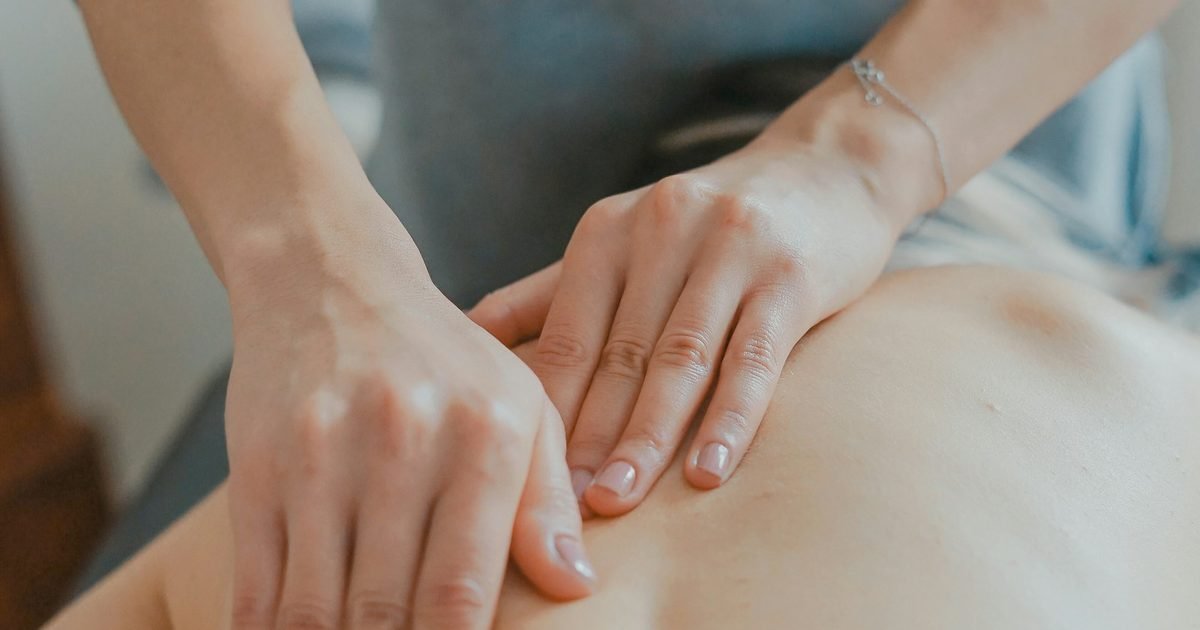
In short: postnatal massage at home means a trained therapist comes to your house, uses warm oil, and works on your back, arms and legs while you rest, usually for about an hour. It can be soothing and is part of traditional care in India. It is only safe if your doctor agrees on timing, your therapist knows your delivery details, and you know when to stop and call for help.
Postnatal massage at home sounds simple. But a few choices decide whether it is a calm hour or a stressful one: who comes, when you start, what you tell them, and what they will not do. This guide walks through the home experience. For the benefits and general timing, see our separate article on postnatal massage: benefits and when to start. Here we cover how to choose a therapist, prepare your room and stay safe.
What a postnatal massage at home session involves
A typical session lasts about an hour, though providers differ. Some publish 60 to 90 minutes. Ask for the exact length when you book.
A session usually runs like this.
- A short chat first. The therapist asks how you delivered, how you are healing, how you slept, and whether you have pain, fever or any medicine to report.
- Setting up. You lie on a bed or mat, covered with towels, and only the area being worked on is uncovered. Your baby can usually be in the room, with someone else watching.
- The massage itself. Slow, rhythmic strokes with warm oil, mostly on the back, shoulders, arms and legs. Pressure should be gentle to moderate. You can ask for more or less at any time.
- A pause afterwards. You rest before getting up. In traditional care this is often followed by a warm herbal bath (Vethukuli).
In Ayurvedic postnatal care, the oil massage is called Abhyanga. At Sutika Home it is one of the daily therapies in a home plan, along with a herbal bath, tummy binding when suitable, and diet guidance. Traditional use is not proof of a medical benefit. Many mothers simply find it relaxing, and that is a fair reason to want it.
Is it safe? Check these before your first session
Massage does not suit everyone on every day. Your own doctor should confirm that it is fine for you, and the therapist needs to know the points below before the first stroke.
After a C-section
Surgery changes what is safe. Healthline’s guidance says to check with both your doctor and your therapist first, and notes that some therapists will not work on anyone who has had surgery in the last six weeks. It also advises avoiding abdominal massage for six weeks after a caesarean. Online start dates vary widely between providers, from about two to three weeks to six weeks or more, so treat any fixed number with caution. Your surgeon’s advice decides it.
At minimum, a safe session after a C-section keeps well away from the wound and the lower tummy until your doctor says otherwise. Our C-section recovery guide explains the healing stages.
Stitches, wound problems and abdominal separation
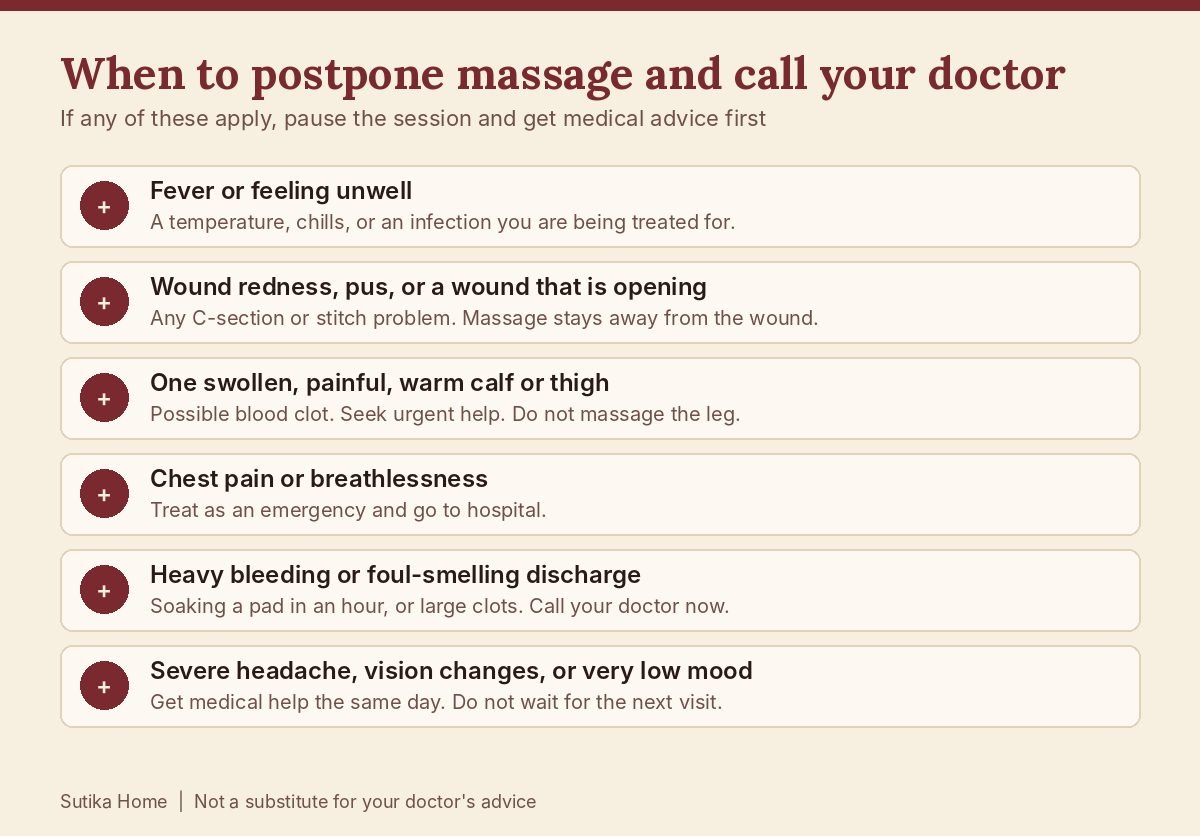
If you have stitches, tears or a wound that looks red, swollen, sore or is leaking, do not have massage near it. Pause and see your doctor. If you have been told you have a gap between your tummy muscles (diastasis recti) or any hernia, ask your doctor which techniques to avoid before anyone presses on your abdomen.
Fever or feeling unwell
If you have a fever, chills or a suspected infection, postpone the session. Massage will not treat it, and it may delay you getting care.
Varicose veins and blood clots
Pregnancy and the first weeks after birth raise the chance of a blood clot in a leg vein. The NHS lists being pregnant or having had a baby in the previous six weeks as one of the times DVT is more likely, and also lists varicose veins and recent surgery. Warning signs include throbbing pain, swelling, and red or darkened skin in one leg, usually the calf or thigh.
If you notice these, ask for urgent medical advice and do not let anyone massage that leg. If you also feel breathless or have chest pain, call emergency services. If you have had a clot before, Healthline says your doctor will likely advise against massage, so ask when it is safe to restart.
Breastfeeding
For most mothers, massage is compatible with breastfeeding, and good therapists plan around feeds. Feed or express before the session. Avoid heavy pressure on the breasts, and tell the therapist if you have a painful lump, redness or fever, which can be signs of an infection such as mastitis. Check with your doctor or a lactation consultant if you are worried.
Who should give a postnatal massage at home?
The therapist matters more than the oil. A general spa masseuse may not know what is different about a body that has just delivered. Look for the following.
- Postnatal training. Not just “certified in massage”. Ask what training covers delivery types, C-section wounds, breastfeeding and warning signs.
- Doctor oversight. Someone qualified should guide the plan and be reachable if a concern comes up. Sutika Home says its care is guided by a doctor and given by trained therapists.
- Willingness to say no. A good therapist will skip or change a session when you have a fever, a wound problem or a swollen leg. Be wary of anyone who says massage fixes everything.
- Clear boundaries. Same therapist where possible, a clear arrival time, and a family member at home during the first visit.
- No hard claims. Be cautious of promises like “melts belly fat” or “boosts milk supply”. Massage can be comforting, but those outcomes are not guaranteed.
If you are comparing a trained therapist with other home help, our guide to a postnatal care therapist versus a nanny explains who does what.
How to prepare your home and yourself
A little preparation makes the session calmer for you and easier for the therapist.
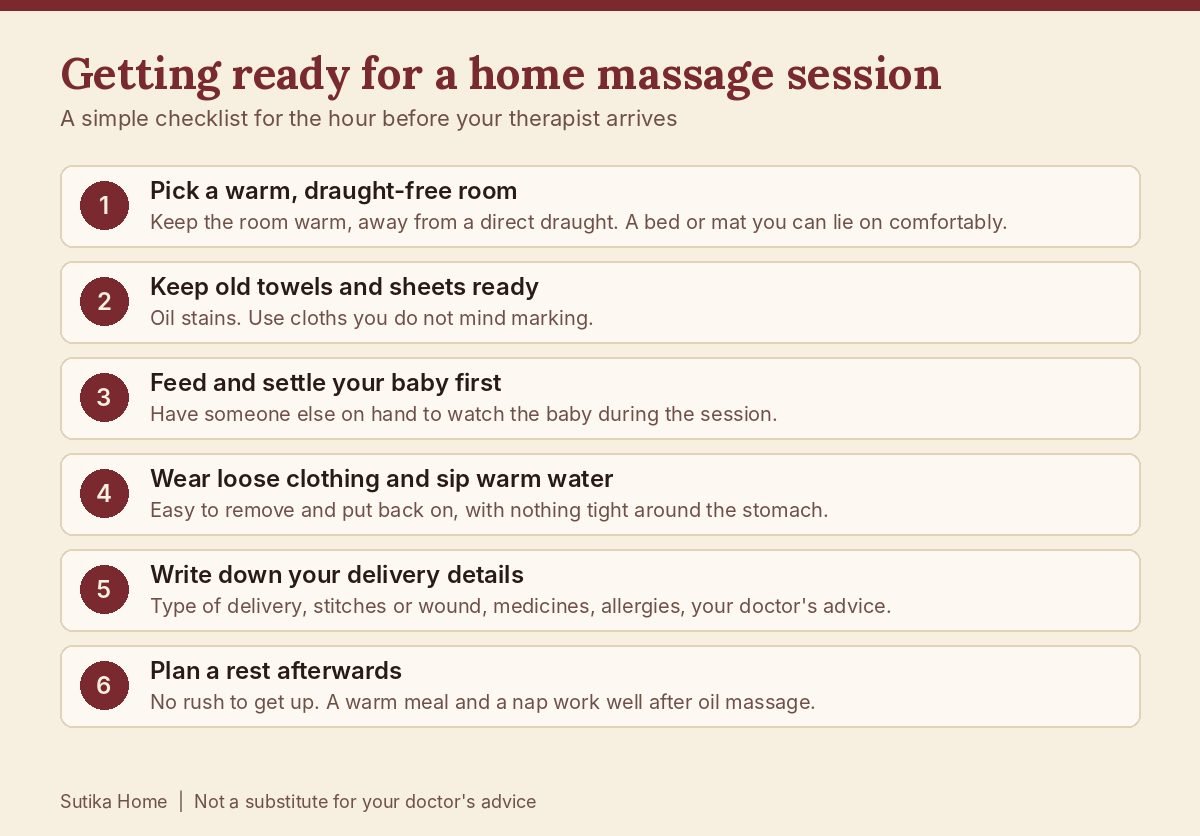
Some extra points:
- Choose the time around baby’s feeds. Many families pick a slot after the morning feed, or when a relative can hold the baby.
- Share your health information in advance. If you can message or call before the first visit, mention your delivery type, wound or stitches, medicines and any allergies.
- Check the oil. Ask what oil is used. If you have sensitive skin or a known allergy, say so and ask to test a small patch first.
- Keep your doctor’s contact handy. Your family should know who to call.
- Eat lightly beforehand. A light meal an hour or so before is easier than a heavy one or an empty stomach. Warm water afterwards is a gentle way to rehydrate.
What to check where you live
Many families today live far from their parents, so professional help at home is a real option. Traffic, distance and apartment rules can still affect it, so ask practical questions.
- Coverage. Which areas does the provider serve? If you are not sure, ask directly instead of assuming. Sutika Home asks you to tell them your city and area when you get in touch, and they will say how they can support you.
- Timing. Ask how they handle slots if the therapist is delayed by traffic, and whether visits can be shifted around the baby’s feeds.
- Building access. Tell your security desk in advance so the therapist is not held at the gate with oil and towels.
- Weather. Rooms can be cool in the mornings or damp in the monsoon. A warm, dry, draught-free room helps, and so does having the bath ready after the session.
Questions to ask before you book
Ask these on the first call. A confident provider will answer them plainly. Vague answers tell you something too.
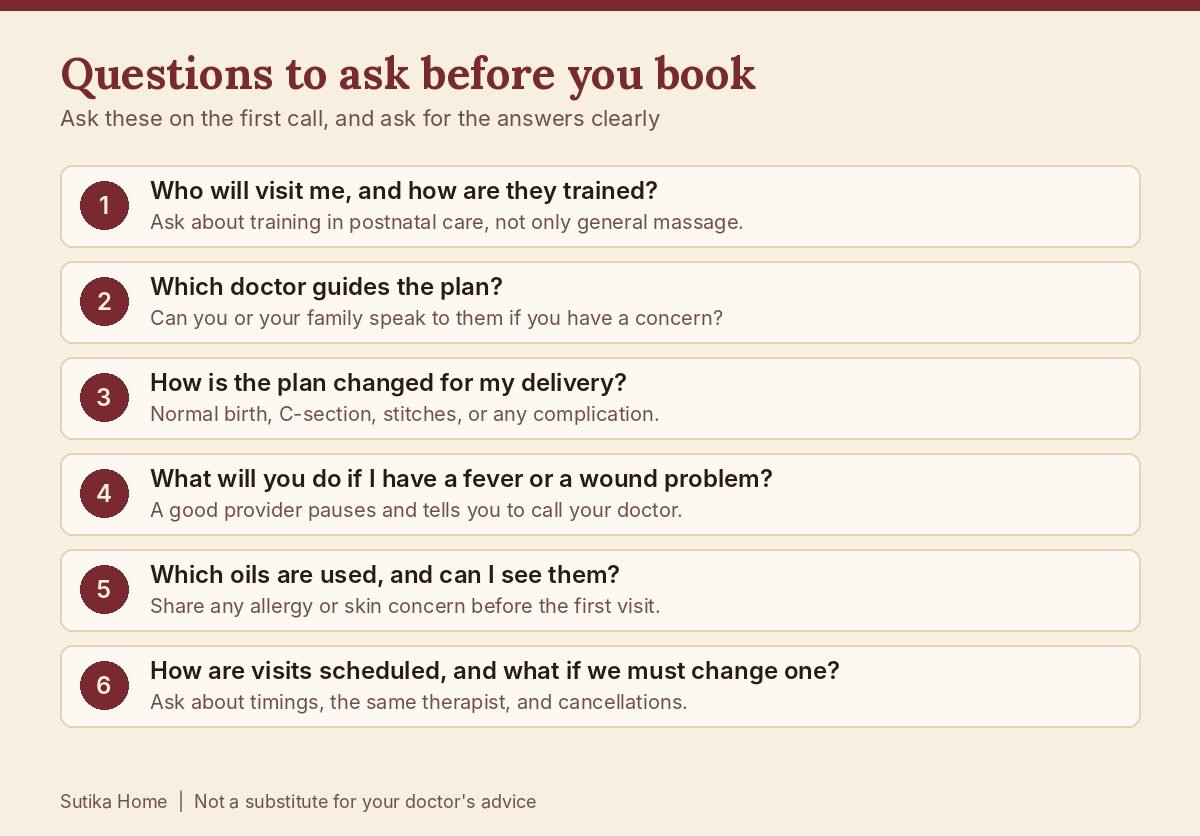
Also ask what the session costs and what it includes. Sutika Home does not publish a fixed price list. Our postnatal care cost guide explains what changes the price and what to ask.
How often and how long: a 7 to 40 day view
There is no single right schedule. Evidence for any particular frequency is limited, and Healthline notes that there is no fixed schedule. Mothers have massage weekly, every two weeks, or only once or twice, depending on cost, time and health.
Traditional postnatal care in India is more regular. It follows a daily routine over about 40 days. That is a tradition, not a medical requirement. If you want to know more, our guide to the 40 days after delivery explains the history.
At Sutika Home, daily visits run for 7, 14, 28 or 40 days, and each day’s visit includes Abhyanga. Families often weigh the choice like this.
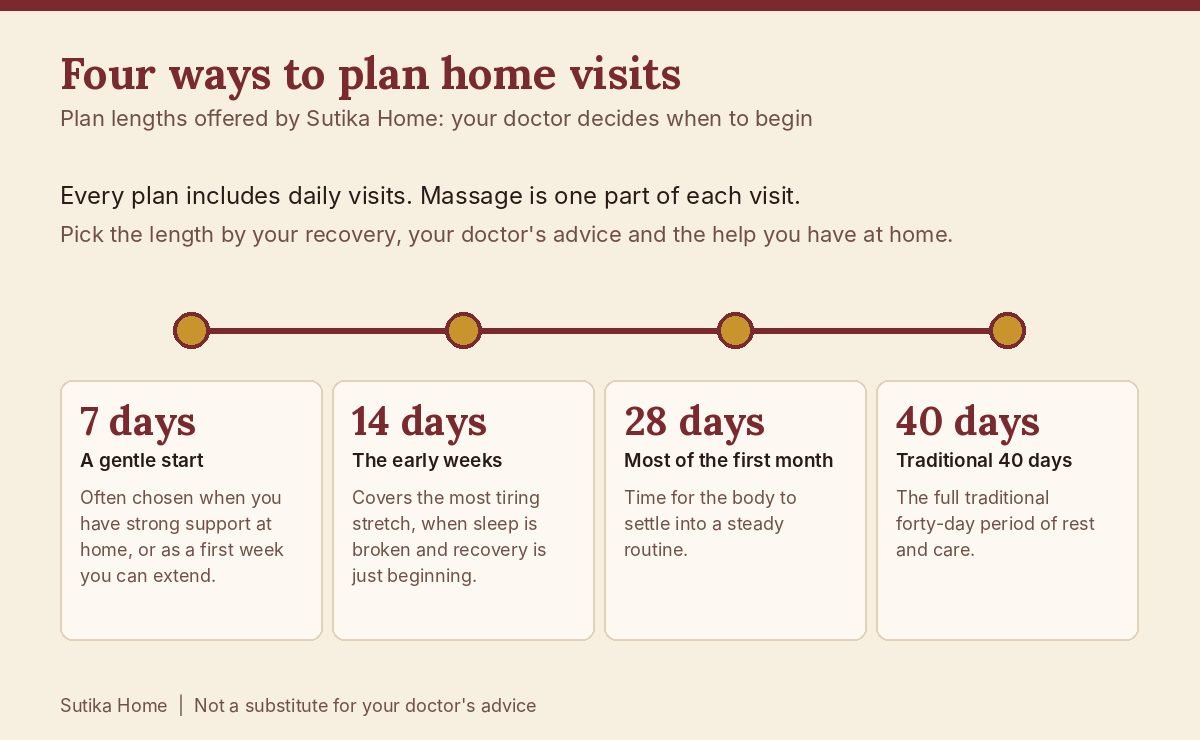
- 7 days: a gentle first week, or a trial you can extend. Suits mothers with strong support at home.
- 14 days: covers the most tiring stretch, when sleep is broken.
- 28 days: most of the first month, with time to settle into a routine.
- 40 days: the full traditional period of rest and care.
Whatever you choose, your doctor decides when to begin, particularly after a C-section. Session length also depends on you. Some mothers prefer a shorter, lighter session while they are sore or tired.
What to do during and after the session
Speak up. Tell the therapist if the pressure is too much, if anything hurts, or if you feel dizzy or unwell. Massage should feel comfortable, not painful. Mild tenderness can happen, but sharp or worsening pain is a reason to stop.
Afterwards, rest, drink water and eat something warm. Watch how you feel over the next day. If you feel unusually feverish, have new swelling, or your bleeding or wound looks different, call your doctor.
When to seek urgent medical help
Home care is not emergency care. Contact your doctor or go to hospital straight away if you have heavy bleeding (soaking a pad in an hour or passing large clots), fever, severe or worsening pain, a red or leaking wound, foul-smelling discharge, a painful swollen calf, chest pain or breathlessness, a severe headache or vision changes, or thoughts of harming yourself or feeling unable to cope. The WHO’s recommendations on postnatal care stress why follow-up after birth matters for both mother and baby.
Is it right for you?
If your doctor agrees, a postnatal massage at home can be a warm, restful part of recovery, especially when family are far away. The person who comes matters most: how well they listen, and whether they will pause when your body says so.
If you would like to talk it through, you can read about postnatal care at home with Sutika Home or request a call back. Share your delivery date, your city and area, and any doctor’s advice, and the team can explain how care could be planned around you. There is no pressure to decide on the first call.
Frequently Asked Questions
When can I start postnatal massage at home?
It depends on your delivery and your doctor. Providers publish different start dates, from about a week after an uncomplicated vaginal birth to several weeks after a C-section. Ask your doctor first, especially if you had stitches, surgery or any complication. A safe provider will wait for that approval.
Can I have a postnatal massage at home after a C-section?
Often yes, once your doctor says the wound is healing well. Healthline advises avoiding abdominal massage for six weeks after a caesarean. A careful therapist works on your back, arms and legs, stays away from the wound, and adjusts positions for comfort. Confirm with your surgeon first.
Is postnatal massage safe while breastfeeding?
For most mothers, yes. Feed or express before the session so you are comfortable, and avoid firm pressure on the breasts. Tell the therapist about any breast pain, redness or fever. These can point to infection and need medical advice, not massage.
Should I avoid massage if I have varicose veins or had a clot?
Ask your doctor first. The NHS lists varicose veins and the weeks after birth as times when clots are more likely. If you have had a clot, Healthline says your doctor will likely advise against massage. Never massage a leg that is swollen, painful and warm. Get urgent help instead.
How often should I have postnatal massage in the first 40 days?
There is no proven ideal number. Some mothers have it weekly, some every other week, some only once or twice. Traditional Ayurvedic care uses a daily routine over about 40 days. Your doctor’s advice, your comfort and the support you have at home should guide the choice.
What should I ask a postnatal massage therapist before booking?
Ask about their postnatal training, who guides the plan, how they adapt care after a C-section, which oils they use, and what they do if you have a fever or wound concern. Also ask about scheduling and what the full cost includes. Clear, calm answers are a good sign.
What if I feel unwell during or after a session?
Stop the session and tell the therapist. If you have a fever, chest pain, breathlessness, a painful swollen leg, heavy bleeding or severe pain, contact a doctor or emergency services right away. Do not wait to see whether it passes. Mention the symptom to your doctor before the next session.
Leave a Reply