
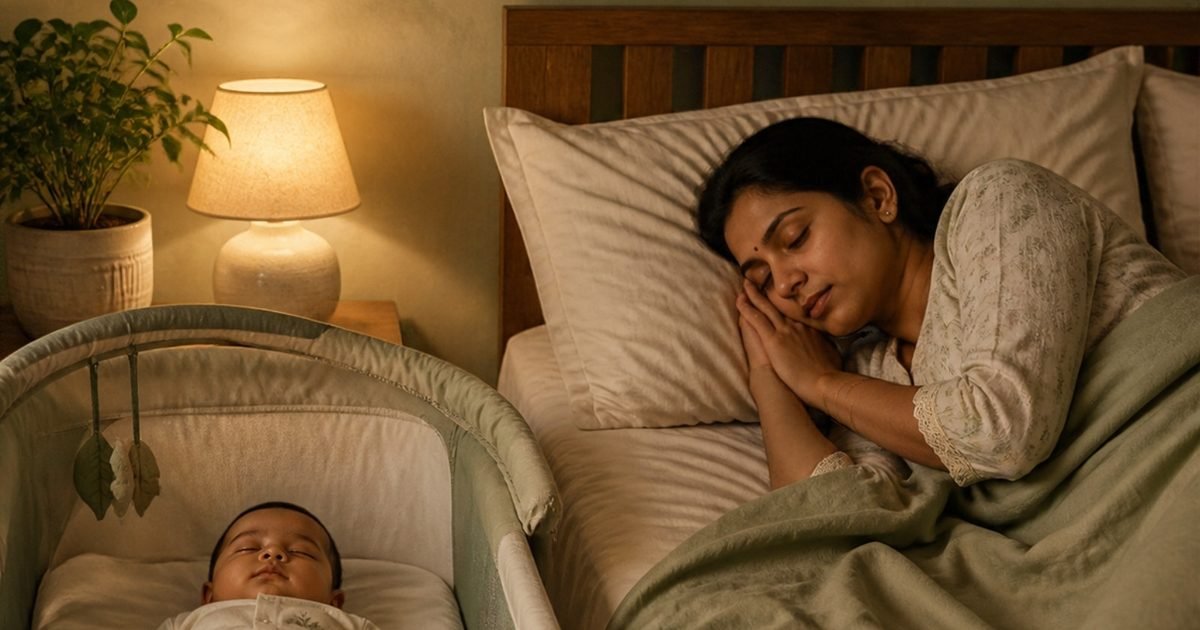
In short: postpartum sleep will be broken for a while, because newborns wake often and your body is recovering. You cannot fix that, but you can protect your rest. Sleep when the baby sleeps, even briefly, share night duties so you get one longer stretch, set up a night station so you are not hunting for things at 3 am, ask for daytime help, and keep a few small routines for wind-down. Frequent night waking is temporary. If you cannot sleep even when you have the chance, feel hopeless, or lose interest in things you enjoy, speak to your doctor, because those can be signs of postnatal depression and are treatable.
The advice most new mothers get about sleep is “sleep when the baby sleeps”. It is well meant and often useless. The baby sleeps at 2 pm, and the laundry, the visitors and the phone are all awake. By evening you have slept for 40 minutes in total and you are crying over a spilled glass of water.
This guide aims to be more practical. It explains why sleep is so broken after delivery, what actually helps, how to split the night with a partner or relative, how to set up your room, what a daily rest routine can look like in an Indian household where visitors and elders come and go, and how to tell tiredness from something more serious. It draws on NHS guidance and is general information, not medical advice.
Why postpartum sleep is so broken
Newborns sleep a lot in total but in short bursts, because their stomachs are small and they need frequent feeds. At the same time, you are dealing with:
- A healing body. Stitches, a C-section wound, afterpains and sore muscles make it hard to find a comfortable position.
- Hormone changes. After birth, hormone levels shift sharply, and many mothers feel wired and tired at once.
- Night feeds. Breastfeeding mothers in particular may be the only person who can feed the baby, though others can help in other ways.
- A mind that stays on guard. Many mothers wake at every small sound, even when the baby is not crying.
- Daytime demands. Visitors, relatives, calls and chores eat the hours when you could rest.
The NHS puts it plainly: night waking is a temporary phase, and babies sleep for longer stretches as they get older (NHS: Sleep and tiredness after having a baby). That does not make it easy, but it does mean you are not doing something wrong.

What helps most
Rest when the baby rests, and let the rest of it wait
The NHS suggests that rest may matter more than housework, and that you set an alarm if you worry about oversleeping. The practical version is simple. When the baby naps in the day, lie down too, even if you do not sleep. Phone on silent, curtains drawn, door shut. Twenty minutes counts. If someone offers to hold the baby so you can nap, say yes without negotiating.
Share the night
If you are formula feeding or combining, a partner or relative can take a feed so you get a longer block. The NHS suggests that breastfeeding mothers can ask a partner to handle nappies, settling or dressing in the morning so that you can go back to sleep, and that once breastfeeding is established, a partner can occasionally give a bottle of expressed milk overnight. Ask your doctor or lactation consultant about timing, because introducing bottles too early can affect supply for some mothers. Our guide to breastfeeding support at home explains what to ask.
A simple pattern many couples use is to split the night into two shifts. One adult is on duty from, say, 9 pm to 2 am, and sleeps in another room if possible. The other covers 2 am to morning. You will sleep better knowing that someone else is responsible.
Get extra help for the day
The NHS also suggests that a friend or relative can look after the baby so that you can nap, and that if you are on your own, someone could stay with you for a few days. If you live in a nuclear family without elders, read our article on postnatal care for nuclear families, which suggests how to divide work between partners and paid help.
Move a little
Regular activity can reduce tiredness, according to the NHS. A short daily walk with your baby is an easy start. Check with your doctor first, particularly after a C-section. Our C-section recovery guide explains what is usually safe in the early weeks.
Eat on time
Skipping meals makes tiredness worse. Warm, simple food at regular times keeps your energy steadier. Our postpartum diet guide lists easy Indian recovery foods. A heavy meal late at night may keep you awake, so make the evening meal light.

Set up a night station
Half of night-time misery is logistics. Set up one spot and stock it before you need it:
- A dim, warm lamp or a night light, so you do not switch on the main light.
- Nappies, wipes, a spare outfit and a burp cloth within reach.
- A water bottle and a small snack for you.
- A comfortable chair or a bed with pillows to support your back while you feed. Our guide to back pain after delivery explains feeding positions that protect your back.
- Your phone on charge, with the screen dimmed. Try not to scroll. The light and the content wake you up more than the feed does.
If you have a partner, agree who restocks it each evening.
Safe sleep when you are exhausted
Fatigue makes mistakes more likely, so a few rules matter. Put your baby to sleep on their back on a firm, flat mattress in their own cot or bassinet, with no pillows, loose blankets or soft toys. Keep the cot near your bed in the early months, if your paediatrician agrees. Try not to fall asleep with the baby on a sofa or armchair. If you feel yourself drifting off while feeding, move to your bed with a clear space around you, or hand the baby to another adult. Ask your paediatrician for guidance that fits your baby, particularly if they were early or small.
A simple daily rest plan
This is a template, not a rule. Adjust it to your household.
- Morning: After the first feed, try to rest for 20 to 30 minutes before visitors arrive. If you have postnatal home care, schedule the visit when you are least likely to be disturbed.
- Midday: Eat a proper lunch, then lie down while the baby naps. Tell visitors you will see them after your rest.
- Afternoon: A short walk or sit by a window. Fresh air and natural light help your body clock.
- Evening: Light dinner, warm shower or wash, dim the lights, keep screens away.
- Night: Agree on shifts. Keep feeds calm and quiet, and keep nappy changes brief.
You will not stick to this every day, and that is fine. Pick the one or two parts that give you the most rest.

Tiredness or something more
Being very tired is normal. Some signs mean it is more than tiredness. The NHS says that not being able to sleep when the baby sleeps, or feeling tired all the time, may be signs of postnatal depression. Other signs include feeling down or hopeless, losing interest in things you usually enjoy, anxiety that will not settle, irritability, difficulty concentrating, or difficult feelings about your baby. Symptoms can start during pregnancy, soon after birth, or up to a year later (NHS: Feeling depressed after childbirth).
If this sounds like you, speak to your doctor, midwife or health visitor as soon as you can. You do not need to have all the signs to ask for help. If you have thoughts of harming yourself or your baby, treat it as an emergency and get help straight away. Our article on baby blues vs postpartum depression explains the difference and where to turn.
See a doctor too if you are so tired that you are unsafe doing everyday tasks, if you have a fever or heavy bleeding, or if you are struggling to cope.
How Sutika Home can help
Sutika Home provides doctor-guided, Ayurveda-informed postnatal care at home. A trained therapist visits daily for 7, 14, 28 or 40 days after a normal delivery or a C-section, with an oil massage, a herbal bath, diet guidance and other traditional therapies adapted to your recovery and your doctor’s advice. Many mothers find that a warm oil massage and bath helps them feel relaxed enough to rest afterward. Our therapists do not do night duty or nanny work, so you will still need a plan for the night shift, but a predictable daytime visit gives you one fixed hour that is about you. If you would like to plan support for the weeks after delivery, you can request a call back. To compare options, our guide to postnatal care at home explains what to expect.
Conclusion
Broken sleep is part of the first months, and it improves as your baby grows. In the meantime, protect what you can: rest in the day without guilt, split the night, set up a night station, ask for help and keep your meals regular. Keep an eye on your mood, and speak up early if tiredness turns into hopelessness or if you cannot sleep even when you can. Rest is not a luxury after birth. It is part of recovery.
Frequently Asked Questions
How much sleep does a new mother get?
It varies a great deal, and many mothers get broken sleep in short blocks for weeks. There is no fixed number to aim for. Focus on getting at least one longer stretch when someone else covers the baby, and on short rests in the day.
How long does postpartum sleep deprivation last?
The NHS says frequent night waking is temporary and that babies sleep for longer stretches as they get older. For most families the hardest part is the first weeks to months. If your own sleep does not improve when the baby does, speak to your doctor.
Is it normal not to be able to sleep even when the baby sleeps?
Occasionally, yes, because your body is on alert. But the NHS notes that not being able to sleep when the baby sleeps, or feeling tired all the time, may be a sign of postnatal depression. If it continues, or comes with low mood or anxiety, see your doctor.
How can I get more sleep with a newborn?
Share night duties, nap when you can, ask relatives or helpers to watch the baby in the day, keep a night station ready, eat regular meals and take short walks. If you are breastfeeding, ask your doctor about when a partner can give an expressed milk bottle.
Can a partner help if I am breastfeeding?
Yes. They can change and settle the baby, bring the baby to you, handle morning routines, and, once breastfeeding is established, occasionally give a bottle of expressed milk. That lets you sleep for a longer stretch.
Should the baby sleep in my room?
Many paediatricians recommend keeping the baby’s cot in the parents’ room in the early months. Ask your paediatrician what suits your baby. Whatever you choose, place the baby on their back on a firm, flat surface without pillows or loose blankets.
Does postnatal massage help me sleep?
A warm oil massage can help you relax, and many mothers find they rest better afterwards. It does not treat insomnia or depression, and it must be adapted to your recovery, particularly after a C-section.
When should I get help for tiredness?
See your doctor if you feel hopeless, lose interest in things you enjoy, cannot sleep even when you can, feel anxious all the time, or struggle to cope. If you have thoughts of harming yourself or your baby, get urgent help.