

In short: baby blues are a short spell of tearfulness, worry and mood swings that starts in the first few days after delivery and usually settles within about two weeks. Postpartum depression is different. It lasts longer, feels heavier, and does not lift on its own. If your low mood is still there after two weeks, is getting worse, or is stopping you from caring for yourself or your baby, speak to your doctor. This guide explains the difference, who is more at risk, what support at home can and cannot do, and the warning signs that need help the same day.
Nobody mentions how many new mothers cry for no clear reason in the first week. You have a healthy baby, a family that is delighted, and you are weeping over a cup of tea. It feels confusing and a little embarrassing. Many mothers hide it, because in many Indian homes the message is that you should be glad and grateful.
You do not have to be either of those things on a schedule. Mood changes after birth are common, and most of them pass. But a smaller group of mothers develop something that does not pass, and they often wait months before saying anything. This article is meant to help you, or someone you love, tell which is which.
What baby blues feel like
Baby blues are very common in the first days after birth. The NHS describes feeling down, anxious or irritable for a few days after delivery as very common, and says it usually goes away within two weeks of the birth. Mayo Clinic lists mood swings, crying spells, anxiety and trouble sleeping as typical.
In practice, mothers describe it like this:
- Crying easily, sometimes at nothing in particular.
- Feeling overwhelmed by small decisions, like what to eat or when to feed.
- Swinging between joy and sadness within the same hour.
- Feeling anxious about the baby’s breathing, feeding or sleep.
- Being short-tempered with people you love.
There is a clear biological backdrop. Hormone levels fall sharply after delivery, you are sleeping in short pieces, your body is healing, and your milk is coming in. Add visitors, advice and your own expectations, and a few wobbly days make sense.
What matters is the direction of travel. With baby blues, there are good moments. You can still enjoy your baby for a while, you can still eat, and by the second week things are getting a little easier.
When it is more than baby blues
Postpartum depression is a medical condition, not a character flaw, and it is not caused by anything you did or did not do. The National Institute of Mental Health says baby blues usually pass within about two weeks, while postpartum depression is more severe or lasts longer than that. It also notes that women with postpartum depression generally do not feel better without treatment.
The usual signs are:
- Sadness, anxiety or emptiness for most of the day, nearly every day, for at least two weeks.
- Losing interest in things you normally enjoy.
- Feeling hopeless, guilty or worthless.
- Extreme tiredness, or being unable to sleep even when the baby sleeps.
- Changes in appetite.
- Trouble concentrating or making simple decisions.
- Difficulty bonding with the baby, or doubting whether you can care for them.
- Thoughts of death, self-harm, or harming the baby.
The NHS adds that symptoms can start in pregnancy, soon after birth, or any time up to a year after the baby is born. Many people assume it must begin in the first week. It often does not. NIMH says most episodes begin within four to eight weeks after delivery, which is exactly when family help tends to leave and the house goes quiet.
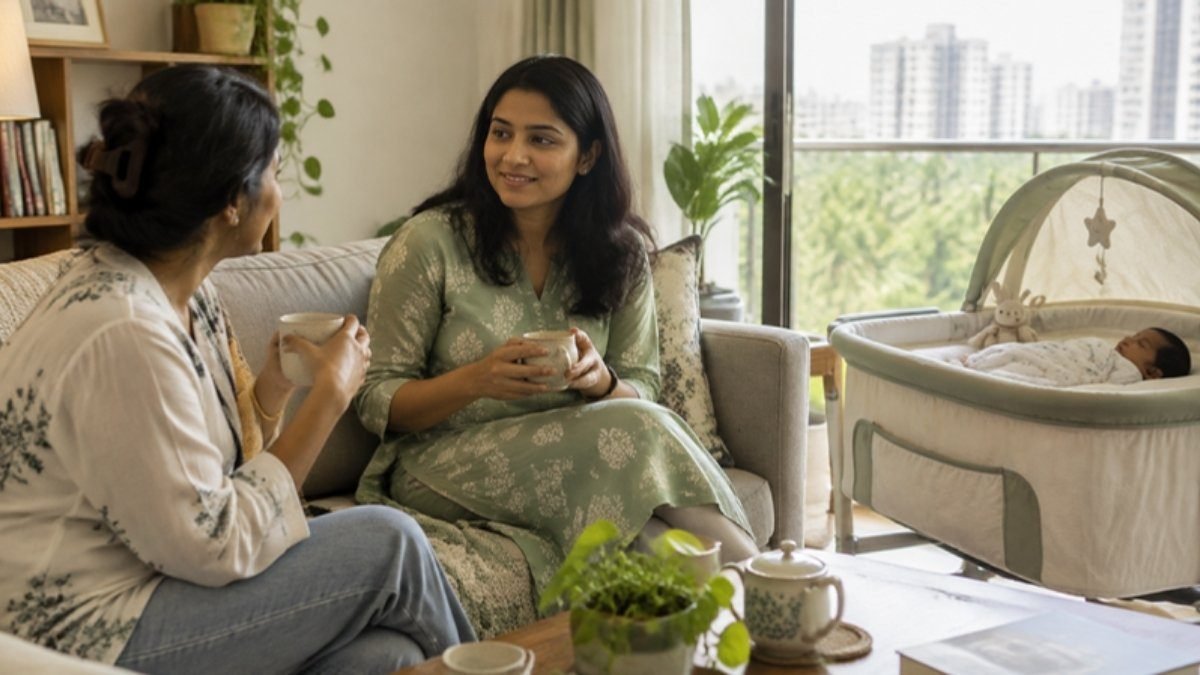
Baby blues vs postpartum depression: a side-by-side view
| Baby blues | Postpartum depression | |
|---|---|---|
| Usual start | First few days after birth | Often 4 to 8 weeks after birth, but can start in pregnancy or up to a year after |
| How long | Up to about 2 weeks | More than 2 weeks, and may continue for months without treatment |
| Mood | Tearful, anxious, up and down | Persistently low, empty or hopeless |
| Daily life | You can still manage most things, with help | Eating, sleeping, feeding and basic care feel very hard |
| Bonding | Usually intact | May feel distant, numb or guilty about the baby |
| Needs treatment | Usually rest, reassurance and support | Needs a doctor’s assessment; therapy, medicine or both |
This table is a guide, not a test. If you are unsure which column you are in, that uncertainty is itself a reason to talk to your doctor.
Postpartum anxiety deserves a mention
Some mothers do not feel sad at all. They feel on edge. They check the baby again and again, cannot settle even when everyone else is asleep, or get racing thoughts and a tight chest. Intrusive thoughts, such as picturing something bad happening to the baby, are also reported by many new parents and are very distressing, although having them does not mean you will act on them.
Anxiety can sit alongside depression or on its own. It is treatable in the same way, through a doctor’s assessment and often talking therapy. It is easy to dismiss as new-mother nerves, which is why it is worth naming.
Who is more likely to struggle
There is no single cause, and it can happen to anyone regardless of age, income or education. NIMH points to a higher risk for people with a personal or family history of depression or bipolar disorder, and for those who had depression in an earlier pregnancy. Other things that commonly add pressure include a difficult birth or an emergency C-section, a baby in the neonatal unit, feeding difficulties, little sleep, money worries, relationship strain and living far from family.
In India, researchers have studied postpartum depression among urban mothers and in several states, and reviews describe it as common and often under-recognised, with stigma and limited access to mental health care among the barriers. We have not quoted a single national percentage here because published figures vary widely by region and method. The practical point is that you are far from alone.
What helps at home
Home support does not treat depression. That is a job for your doctor, and we will say it plainly again below. But practical care around you can lower the load, and a calmer home gives treatment a better chance.
Protect sleep in blocks. Broken sleep makes everything feel worse. If you are bottle feeding or expressing, someone else can take one night feed so you get a stretch of four to five hours. If you are breastfeeding, a partner or relative can handle nappies, burping and settling so that you only wake for the feed itself. Our guide to postnatal care for nuclear families shows how to split the night.
Keep food simple and regular. Skipped meals and low blood sugar do not help mood or energy. Warm, easy meals prepared by someone else are a real kindness. See our postpartum diet guide for India for ideas that suit recovery and feeding.
Get outside, briefly. A short walk or sitting in daylight for ten minutes is not a cure, but many mothers find it takes the edge off a heavy day. After a C-section, check what your doctor allows. Our C-section recovery guide covers activity limits.
Say how you feel out loud. Pick one person who will not argue with you, and tell them the real version. “I am not coping” is a complete sentence.
Have a daily hour that belongs to you. Many mothers find that a regular visit from someone who is there for their recovery, and not for the baby or the house, gives the day a shape and a bit of rest. A warm oil massage, a bath and quiet time may feel soothing, though they are comfort, not treatment.

How family can help without hovering
Partners and relatives often want to help and do not know how. A few things work well:
- Ask specific questions, like “Did you eat?” and “How did you sleep?” instead of “Are you okay?”
- Take over a task completely rather than offering. Cook dinner, do the laundry, or handle the night settling.
- Do not compare her with other mothers or tell her what she should be feeling.
- Watch for a pattern. A mother who has not smiled, eaten properly or slept for several days, or who says she is a burden, needs a doctor.
- Offer to go with her to the appointment, or to make the call.
Who to speak to and what to say
Start with whoever you already see. That can be your obstetrician, a family doctor, a paediatrician at the baby’s check-up, or a mental health professional. You do not need a perfect description. Something like “I have felt low and teary for more than two weeks and I am not enjoying the baby” is enough.
Your doctor may ask a few screening questions and look at sleep, thyroid, iron levels and other physical causes that can mimic low mood. Treatment can include talking therapies such as cognitive behavioural therapy, medicine, or both. The NHS notes that many antidepressants are safe to use while breastfeeding, and NIMH advises telling your provider that you are breastfeeding so treatment can be planned safely. The NHS says postnatal depression usually gets better in three to six months and is more likely to improve with treatment.
Your postnatal check-up is also a good moment to raise this. Mayo Clinic suggests a check-in at two to three weeks and a full postpartum exam at six to twelve weeks. Do not wait for the formal visit if you feel unwell sooner.
If you want to talk to someone at any hour, India’s government-run Tele-MANAS service offers free, 24-hour counselling on 14416 (also 1-800-89-14416), in many languages.
Warning signs that need help today
Some situations are emergencies. Call your doctor, go to the nearest hospital, or call 112 straight away if you or someone you love has:
- Thoughts of suicide, or of harming the baby.
- Hallucinations, confusion, extreme agitation, or believing things that are clearly untrue.
- Not sleeping at all for a couple of days while feeling unusually high-energy.
- An inability to care for herself or the baby.
NIMH describes postpartum psychosis, which involves delusions, hallucinations, mania, paranoia or confusion, as a psychiatric emergency. It is rare, and it needs immediate medical attention. Do not leave the mother alone, and do not wait for the symptoms to pass.
How Sutika Home fits in
Sutika Home provides doctor-guided, Ayurveda-informed postnatal care at home. A trained therapist visits daily for 7, 14, 28 or 40 days after a normal delivery or a C-section, with oil massage, a herbal bath, diet guidance and other traditional therapies adapted to your recovery.
We want to be clear about the limits. Our therapists are not mental health professionals, and our care does not diagnose or treat depression or anxiety. What it can do is give you a daily visit that is entirely about your recovery, take some physical strain off you, and give someone trained a regular chance to notice if you seem unwell and encourage you to speak to your doctor. If you are worried about your mood, please talk to your doctor first. You can also read what happens in a typical home visit, or request a call back if you want to plan support for the weeks after delivery.
Conclusion
Baby blues are common, short and usually settle with rest, food and kindness. Postpartum depression and anxiety last longer, run deeper and need a doctor. The two-week mark is a useful rule of thumb, but you do not need to wait for it if you are frightened, hopeless or having thoughts of harm. Asking for help early is not a sign that you are failing. It is the quickest way back to feeling like yourself.
Frequently Asked Questions
How long do baby blues last?
Baby blues usually start within the first few days after birth and settle within about two weeks, according to the NHS and the National Institute of Mental Health. If low mood continues past two weeks or gets worse, speak to your doctor.
What is the difference between baby blues and postpartum depression?
Baby blues are milder and short-lived, with tearfulness and mood swings that ease by about two weeks. Postpartum depression lasts longer, is more severe, and can affect eating, sleeping, bonding and daily care. It usually needs treatment.
When does postpartum depression start?
It can start during pregnancy, soon after birth, or up to a year later. NIMH says most episodes begin within four to eight weeks after delivery.
Can I have postpartum depression if I love my baby?
Yes. Depression is not a lack of love. Many mothers with postpartum depression love their babies deeply and feel guilty about how low they feel. That guilt is a symptom, not a verdict.
Can fathers or partners get postnatal depression?
Yes, partners can also become depressed or anxious after a baby arrives. If your partner seems persistently low, withdrawn or anxious, encourage them to see a doctor.
Is it safe to take medicine for postpartum depression while breastfeeding?
Often it is. The NHS says many antidepressants are safe to use while breastfeeding. Tell your doctor that you are breastfeeding so they can choose the right option. Do not start or stop medicine on your own.
Can postnatal massage or home care cure postpartum depression?
No. Massage, warm food and rest can make you more comfortable and may help you sleep better, but they do not treat depression. See your doctor for assessment and treatment, and use home care as support alongside it.
Where can I get help in India right now?
Speak to your doctor, or call Tele-MANAS on 14416 (1-800-89-14416) for free 24-hour counselling. For immediate danger, call 112 or go to the nearest emergency department.
Leave a Reply