

In short: weight loss after delivery should not begin in the first six weeks for most mothers. Your body is healing, your milk supply is settling, and your sleep is broken. A common medical suggestion is to wait for your six-week check-up, and if you are breastfeeding, to avoid cutting calories sharply until your baby is at least two months old and your supply is steady. Aim for slow, steady loss, eat regular nourishing meals, start with walking and pelvic floor work, and avoid crash diets. This guide explains the timeline, what to eat in an Indian kitchen, when exercise is safe, and what traditional postnatal care can and cannot do.
Everyone has an opinion about your body after a baby. Relatives comment on your stomach in the first week. Social media shows women “bouncing back” in a month. You may be quietly wondering why you still look six months pregnant when the baby has arrived.
Here is the honest picture. The weight took nine months to arrive, and it will not leave in nine days. A new mother has real work to do: healing, feeding, sleeping when she can. Weight loss after delivery works best when it is slow and comes second to recovery.
What happens to your weight right after birth
Some weight goes immediately. Mayo Clinic says most people lose about 13 pounds (around 6 kg) during delivery, from the baby, placenta and fluid. More comes off through fluid loss in the days that follow. Cleveland Clinic similarly notes that most of the delivery weight comes off in about the first week, while other pregnancy-related changes take longer.
After that, you may still look pregnant. Your womb takes several weeks to shrink back, the skin and the abdominal muscles have stretched, and extra fluid and fat stores remain. This is normal. It does not mean you are failing.
When can you start trying to lose weight?
MedlinePlus advises waiting until your six-week check-up before trying to slim down, and, if you are breastfeeding, waiting until the baby is at least two months old and your milk supply has settled before cutting calories sharply. Your own doctor may give different advice, especially after a C-section, a complicated delivery, gestational diabetes or high blood pressure in pregnancy, so treat these as general guidance.
Until then, the aim is not weight loss. It is:
- Healing.
- Eating enough to recover and feed.
- Sleeping as much as you can.
- Gentle movement as your doctor allows.
A realistic timeline
MedlinePlus suggests aiming to lose about 1.5 pounds (about 670 grams) a week once you begin, and to expect to return to your pre-pregnancy weight within six to twelve months of delivery. Many mothers take longer, and that is also normal. Cleveland Clinic says mothers who already ate well and exercised before pregnancy often lose weight faster, and that breastfeeding can help at first, but loss often slows later because the body keeps some reserves to support milk production.
Your body shape may also differ from before, even at the same weight. Hips, chest and abdomen can change. A weighing scale will not tell you how strong you feel, or how well you are sleeping.
If you gained a lot of weight in pregnancy, or you have a medical condition such as diabetes, thyroid disease or polycystic ovary syndrome, ask your doctor for a plan that suits you.
Eating for recovery and feeding
You do not need a special diet. You need regular meals with enough protein and fibre, and no long gaps.
MedlinePlus suggests:
- Not skipping meals, and eating five or six small meals or snacks a day.
- Eating breakfast.
- Choosing fibre and protein-rich snacks.
- Drinking plenty of fluids and limiting sugary drinks and juice.
- Choosing baked or grilled foods over fried ones, and limiting sweets and saturated fat.
- Avoiding crash and fad diets, because early loss on them is mostly water, and the muscle or fat lost is usually regained.
How much extra do you need when breastfeeding?
Sources give a range. MedlinePlus says an exclusively breastfeeding mother needs about 500 extra calories a day compared with before pregnancy. Cleveland Clinic says breastfeeding requires about 300 extra calories a day. Your needs depend on your size, activity and how much your baby feeds. The practical message is the same: do not cut calories hard while you are feeding. Cleveland Clinic warns that cutting too far can lower milk supply, cause fatigue and leave you short on nutrients.
An Indian plate
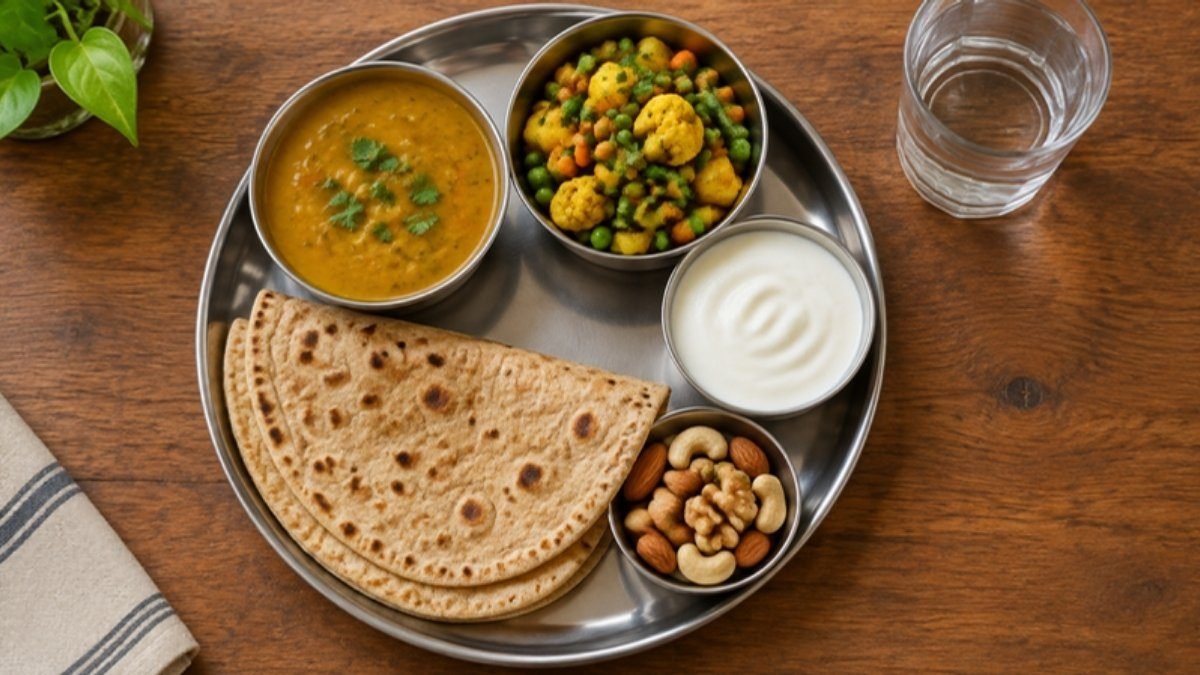
A balanced plate in many Indian homes looks like this:
- Half the plate cooked vegetables or salad, with dal or sambar.
- A quarter roti, rice or millet.
- A quarter protein: dal, curd, paneer, egg, fish or chicken if you eat them, sprouts or legumes.
- A small amount of ghee or oil, which is part of traditional postnatal food and does not need to be removed.
- Fruit between meals, a handful of nuts, and plenty of water or warm fluids.
Traditional postnatal foods deserve a word. Laddus, gond, dry-fruit mixes and ghee-rich dishes are made to be energy dense. They suit a recovering, feeding mother in modest portions. If you are gaining weight, you do not need to give up tradition. Smaller portions and balancing them with vegetables and protein usually work better than cutting out foods your family considers important. Our postpartum diet guide for India walks through the Sutika Aahar approach to warm, nourishing food.
Movement: what is safe and when
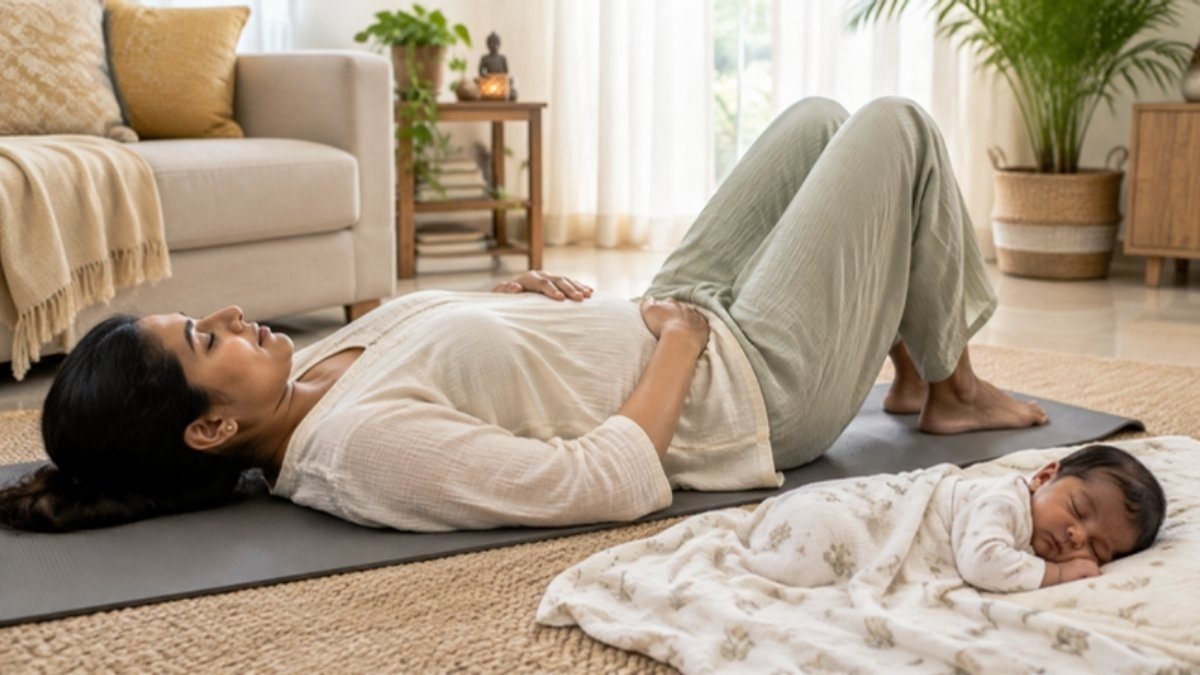
Start small. Walking is usually fine once you feel able, often soon after getting home. After a C-section, follow your surgeon’s instructions on lifting, stairs and activity. Our C-section recovery guide covers what is typical in the first weeks.
Start with the pelvic floor and deep core
The NHS advises starting with pelvic floor and deep stomach exercises, and avoiding sit-ups, planks and high-impact exercises to start with. The NHS pelvic floor routine is to squeeze as if you are holding in wind and stopping the flow of urine, alternating long squeezes (no longer than 10 seconds) with quick short ones, aiming for 10 repeats of each at least three times a day, while breathing normally.
Check for abdominal separation
During pregnancy the two stomach muscles often separate, usually by about two finger widths, and the NHS says this usually returns to normal by around eight weeks after birth. If the gap still looks obvious at eight weeks, see your GP or physiotherapist, because it can contribute to back problems. Avoid heavy lifting and straining until it settles.
When to return to harder exercise
Cleveland Clinic says core exercises usually wait until your doctor clears you, about a month after a vaginal birth and longer after a C-section, and that running, weightlifting and other intense workouts should wait at least four weeks. When you do return, ease back in, since your body needs time to recondition. If you leak urine when you cough or jump, feel heaviness in the pelvis, or have pain, slow down and ask for a pelvic health physiotherapist.
Does a tummy belt or binding help you lose weight?
Not by itself. A belly belt or traditional binding may feel supportive, but neither one burns fat or shrinks the womb faster. If you are curious, read our guide to the tummy belt after delivery, and ask your doctor before using any binding, especially after a C-section.
Sleep and stress matter more than you think
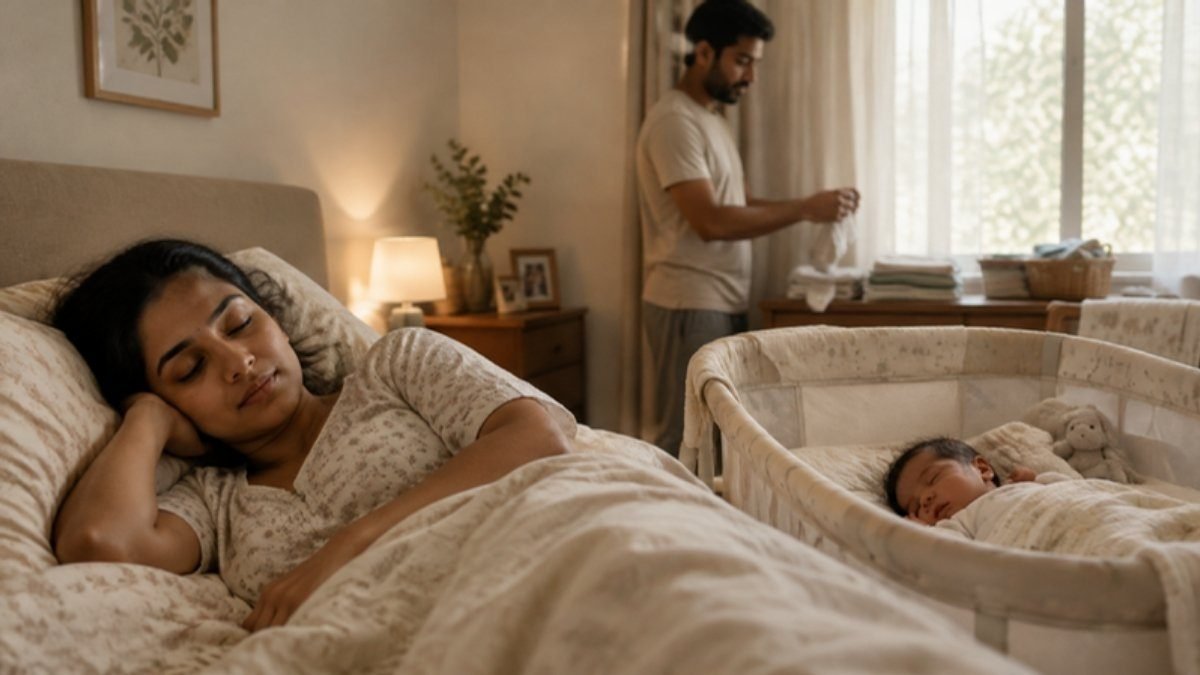
Cleveland Clinic notes that poor sleep can make weight loss harder. That is cruel news for a mother of a newborn, but it makes a case for protecting sleep where possible, and for having someone else handle a night feed, nappies or the older child so you can rest. If you are feeling very low, anxious or numb, talk to your doctor. A heavy mood can change eating and sleeping in ways that look like a weight problem.
What to be careful of
- Detox teas, slimming pills and “postpartum fat burners”. Little reliable evidence shows they are safe while breastfeeding, and some contain laxatives or stimulants. Skip them.
- Very low-calorie diets. These can reduce milk supply and energy.
- Tight corsets or waist trainers. They can limit breathing and affect healing, and they do not remove fat.
- Online challenges. A 30-day plan written for people who are not postpartum is not for you.
- Comparing yourself with others. Pregnancy weight gain, delivery type, feeding, sleep and genes differ.
Where traditional postnatal care fits
Traditional postnatal care in India emphasises rest, warm food, massage and recovery. These can help you feel looked after, eat regularly and sleep better, which supports a healthy return to your routine. They do not directly cause fat loss, and we would not promise that they do.
Sutika Home offers doctor-guided, Ayurveda-informed postnatal care at home, with a trained therapist visiting daily for 7, 14, 28 or 40 days. The plan includes oil massage, a herbal bath, diet guidance and, when it suits your recovery, abdominal binding. For weight concerns, diet advice stays within your doctor’s guidance. You can request a call back to plan care for the weeks after delivery, or see our postnatal massage guide to understand what a session involves.
A simple six-month pattern
This is a general outline, not a prescription:
- Weeks 0 to 6: rest, eat regularly, walk gently, do pelvic floor exercises and keep your postnatal appointments.
- Around the six-week check-up: ask your doctor whether you are cleared for exercise and whether your weight, blood pressure or blood sugar need attention.
- Weeks 6 to 12: add longer walks, simple strength work and core exercises as cleared. Keep eating enough if you are feeding.
- Months 3 to 6: build up activity slowly. If you want to lose weight, aim for a gentle, steady pace and watch your supply and energy.
- Months 6 to 12: many mothers see their weight settle. If you are well but not at your goal, ask for a review rather than adding restrictions.
When to call your doctor
Speak to your doctor or midwife if you have heavy bleeding, fever, a wound that is red or leaking, severe pain, breathlessness, a painful swollen leg, or thoughts of harming yourself or the baby. Also speak to them if you are losing weight very quickly without trying, feel faint, notice a drop in milk supply, or are thinking about restricting food in a way that worries you.
Conclusion
Weight loss after delivery should be slow, late and kind. Heal first, wait for your six-week check-up, eat regularly, walk, do your pelvic floor exercises, and add harder exercise only when cleared. Ignore the pressure to bounce back. A strong, rested mother who feeds well and recovers properly is doing exactly what she should.
Frequently Asked Questions
When can I start losing weight after delivery?
MedlinePlus advises waiting until your six-week check-up. If you are breastfeeding, wait until your baby is at least two months old and your milk supply has settled before cutting calories sharply. Follow your own doctor’s advice.
How much weight can I safely lose per week after delivery?
MedlinePlus suggests about 1.5 pounds (around 670 grams) a week once you start, and returning to pre-pregnancy weight within six to twelve months. Many mothers take longer. Slow loss is safer than rapid loss.
Does breastfeeding help you lose weight?
It can help at first, but Cleveland Clinic notes that weight loss often slows later because your body keeps some reserves to support milk production. You need extra calories while breastfeeding, so avoid strict diets.
How many extra calories do I need while breastfeeding?
Estimates vary. MedlinePlus says about 500 extra calories a day for exclusive breastfeeding, and Cleveland Clinic says about 300. Ask your doctor or a dietitian what suits you.
Can I do crunches or sit-ups after delivery?
Not early on. The NHS advises avoiding sit-ups, planks and high-impact exercise at first, and starting with pelvic floor and deep stomach exercises. Ask your doctor or a physiotherapist when to progress, especially after a C-section.
Will a tummy belt help me lose weight after delivery?
No. A belt may feel supportive, but it does not burn fat or shrink the womb faster. Check with your doctor before using one.
Why do I still look pregnant after delivery?
Your womb takes several weeks to shrink, and your abdominal muscles and skin have stretched. The two stomach muscles usually return to normal by about eight weeks, according to the NHS. If the gap is still obvious then, see a doctor or physiotherapist.
Can traditional postnatal massage and food help me lose weight?
They can help you rest, eat regularly and feel cared for, which supports recovery. They are not a weight-loss treatment. Keep portions balanced and follow your doctor’s advice.
Leave a Reply