
In short: back pain after delivery is very common, and in most mothers it comes from posture, lifting, feeding positions and the physical changes of pregnancy rather than anything serious. It usually eases as your core, pelvic floor and ligaments recover. What helps most is supporting your back while you feed, keeping the baby close when you lift, avoiding heavy lifting for the first weeks, staying gently active and getting enough rest. See a doctor if the pain does not improve, gets worse, or comes with fever, leg weakness, numbness around the genitals or changes in bladder or bowel control. Those need urgent care.
You expected sore stitches and sleepless nights. You did not expect your back to ache every time you pick the baby up. By the end of the day you are bent over the cot, shoulders up near your ears, and wondering whether this is just what motherhood does to a body.
It is common, and there are good reasons for it. The good news is that there are also several things you can change today, starting with where you sit to feed.
Why your back hurts after delivery
There is rarely one cause. Most mothers have a mix of these.
Pregnancy changed your posture. For months your belly shifted your centre of gravity forward, your lower back curved more, and your ligaments softened under hormone changes. The NHS physiotherapy leaflet from Norfolk and Norwich University Hospitals notes that your ligaments may stay softer for some time after birth, so posture matters.
Your stomach muscles are still recovering. During pregnancy the two stomach muscles often separate by about two finger widths. The NHS says this usually returns to normal by around eight weeks after birth. Until then, the core is not offering its usual support to your spine.
Feeding and carrying put you in awkward positions. Hunching over a newborn for hours, leaning forward to latch, or sitting on a soft sofa without back support loads your neck, shoulders and lower back. Mothers also carry a baby on one hip, carry a heavy car seat or lift a toddler.
Birth and delivery. A long labour, a C-section or an epidural can leave you stiff or sore in different ways. Many mothers feel muscle soreness in the back and buttocks after pushing.
Tiredness and stress. Poor sleep makes you more sensitive to pain and less likely to move well.
Pelvic girdle pain. Some mothers have pain at the back of the pelvis or pubic bone that continues after birth. A physiotherapist can assess this.
How long does it last?
For many mothers it settles over the first weeks to months as the core strengthens and everyday movements become more comfortable, but timing varies a great deal. The NHS advises seeing a GP if back pain does not improve after a few weeks of home treatment. If it is still bothering you when you have your six-week check-up, mention it there. The NHS says that check-up is a good time to raise physical concerns, and a GP can refer you to a physiotherapist.
What helps right now
Set up your feeding spot
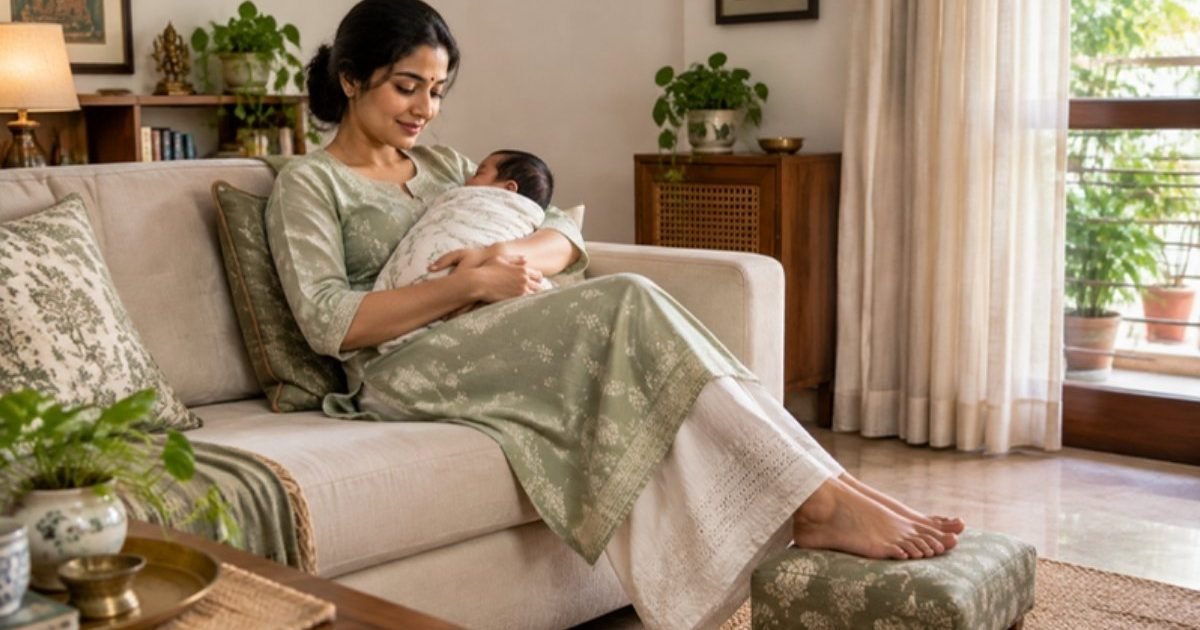
The Norfolk and Norwich physiotherapy advice recommends supporting your back, relaxing your shoulders and resting your feet on the floor, with a footstool if needed. The NHS suggests sitting with your back supported and a small cushion behind your waist while feeding.
A simple setup:
- Choose a chair or sofa corner that supports your back, not a soft sagging seat.
- Put a cushion behind your waist and a footstool under your feet.
- Bring the baby up to you on a pillow, rather than leaning down to the baby.
- Keep your shoulders relaxed and your neck long.
- Change sides, and change position now and then.
If feeding is painful or awkward, see our guide on breastfeeding support at home.
Lift and carry with care
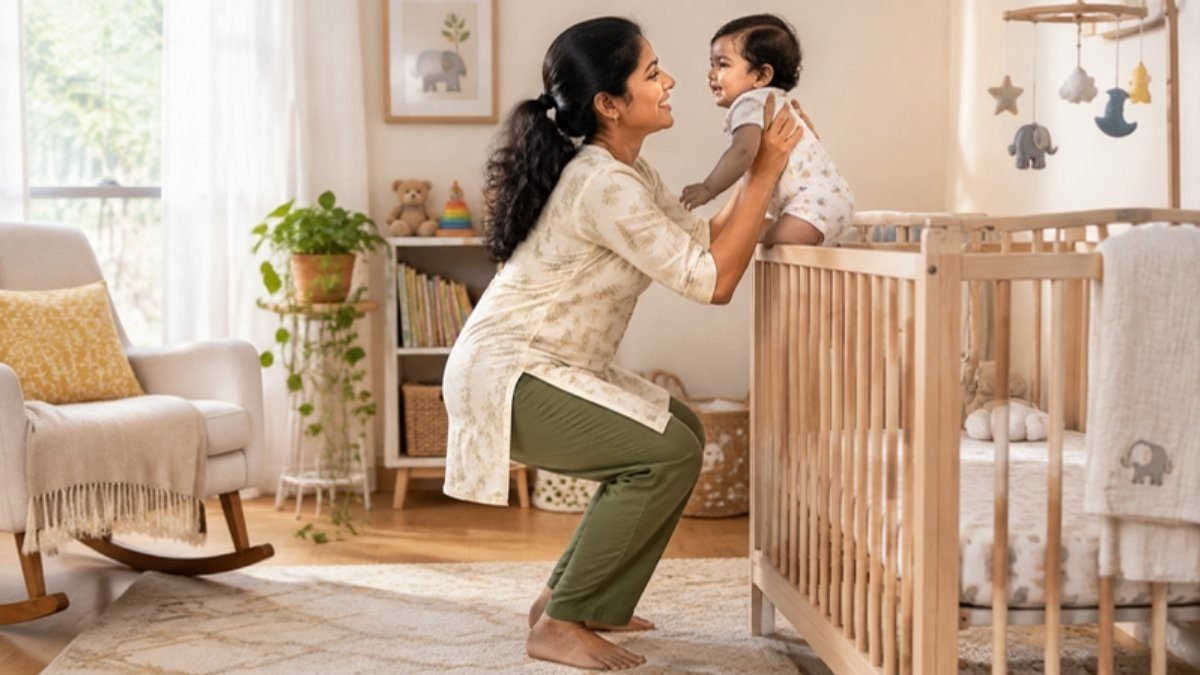
The same physiotherapy leaflet suggests avoiding lifting toddlers or anything heavy for the first six weeks. If you must lift, keep your back straight, bend your knees, use your thigh muscles to stand up, and tighten your tummy and pelvic floor first. Never lift while bending or twisting. Avoid carrying the car seat with the baby in it where possible, and choose a pram with handles at a comfortable height. The NHS adds to kneel or squat for low tasks rather than bending your back, and says a well-fitting sling may help.
If you had a C-section, your surgeon’s limits on lifting come first. See our C-section recovery guide.
Change nappies and bathe at the right height
Work at waist height, or kneel if the surface is low. Avoid carrying a full baby bath in the early weeks, since it is very heavy. Put the baby’s things where you do not need to bend or twist.
Keep moving, gently
The NHS advises staying active and keeping up your daily activities, and avoiding long periods in bed. Short, frequent walks usually help more than lying down all day. The NHS also suggests heat for stiffness or muscle spasm and an ice pack for pain, both wrapped in a cloth, and says walking, swimming, yoga and pilates may help once you are cleared to exercise. For painkillers, check with your doctor or pharmacist about what is safe while breastfeeding.
Start with pelvic floor and deep core work
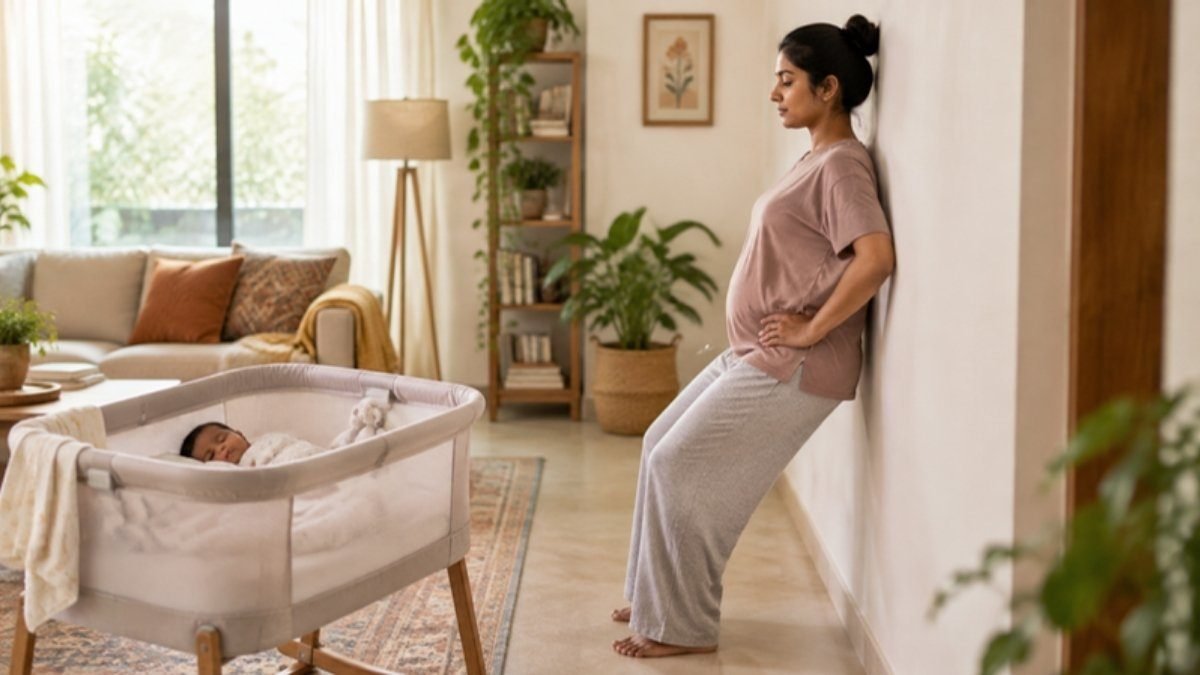
The NHS advises starting with pelvic floor and deep stomach exercises and avoiding sit-ups, planks and high-impact exercise at first. For the pelvic floor, it suggests squeezing as if holding in wind and stopping the flow of urine, alternating long squeezes (up to 10 seconds) with short quick ones, ten repeats of each, at least three times a day, with normal breathing. The Norfolk and Norwich leaflet also gives a standing pelvic tilt: stand with your back against a wall, tilt your hips so your lower back presses to the wall, hold for four seconds and repeat six times. If you are unsure, ask a pelvic health physiotherapist.
Check for abdominal separation
If your tummy still domes or ridges when you sit up, and the gap is still obvious at eight weeks, the NHS says to contact your GP, because you may be at risk of back problems. Avoid straining on the toilet and heavy lifting meanwhile.
What about postnatal massage?
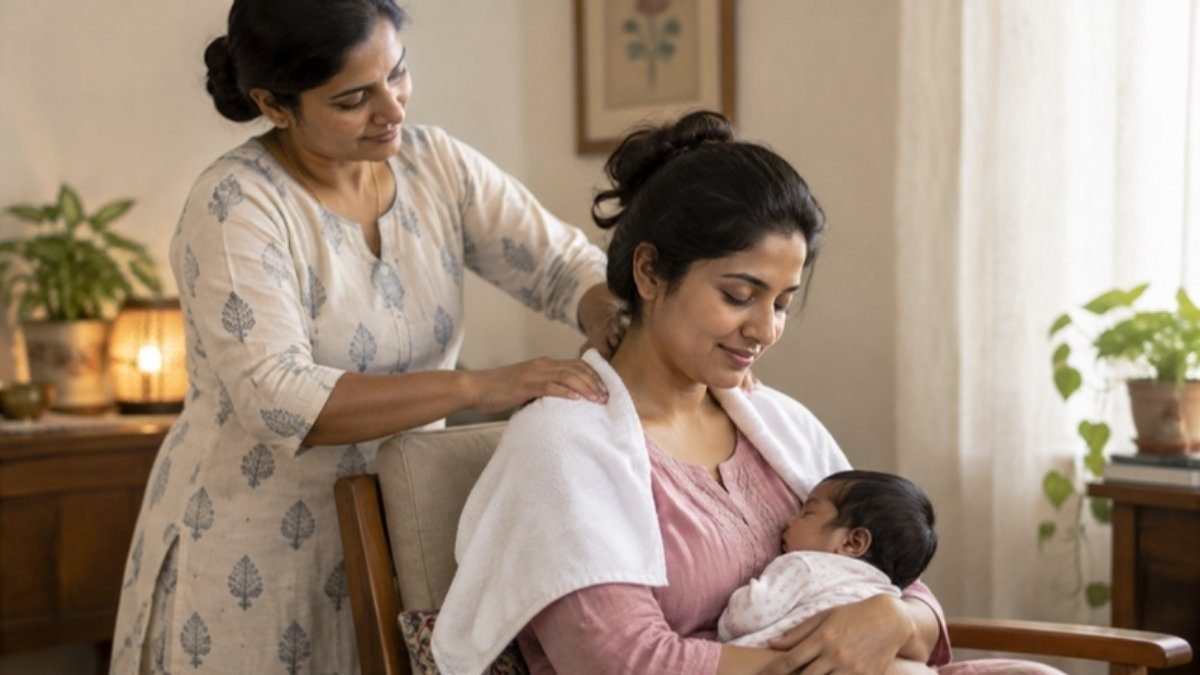
Many mothers in India have a traditional oil massage after delivery, and many find it soothing for tight shoulders and a sore back. It can ease muscle tension and help you rest. It is not a treatment for a back condition, and it should be adapted to your recovery.
Some points to keep in mind:
- Ask your doctor first, especially after a C-section, with stitches, or if you had any complication.
- Skip or pause massage if you have fever, a wound that looks red or leaking, a swollen or painful calf, or pain that is new and severe.
- Gentle pressure is enough. Deep pressure on the back is not needed.
- Tell the therapist about any numbness, tingling or spreading pain.
Our guides explain when to start postnatal massage and what to expect from a session at home.
When back pain needs a doctor
Do not put up with pain for months without asking. Book a routine appointment if:
- The pain has not improved after a few weeks.
- It stops you doing daily activities or is hard to cope with.
- It does not ease with rest or is worse at night.
- It gets worse when you cough, sneeze or strain.
- You have persistent pain at the back of the pelvis or the pubic bone.
- The stomach muscle gap is still obvious at eight weeks.
Urgent warning signs
The NHS advises urgent help for the following. Get urgent medical help the same day for fever or feeling generally unwell with back pain, or for severe pain that starts suddenly or worsens quickly. Call emergency services or go to the nearest emergency department if you have:
- Pain, tingling, weakness or numbness in both legs.
- Loss of feeling around the genitals or anus.
- Difficulty passing urine, or loss of control of your bladder or bowels.
- Chest pain.
Do not drive yourself. Ask someone to take you or call an ambulance.
Make the house back-friendly
A few small changes reduce strain across a day:
- Keep a feeding station with water, snacks, a cushion and a footstool.
- Raise the changing surface to waist height.
- Ask visitors to hand you the baby rather than you bending to pick them up from a low cot.
- Put the things you use most between waist and shoulder height.
- Use a pram or sling that fits you, and adjust the handles.
- Sleep with a pillow between your knees if lying on your side, and avoid long hours curled up on the sofa.
- Share the baby’s carrying and lifting so one parent does not take the whole load.
If you are managing alone, our guide to postnatal care for nuclear families suggests how to divide tasks.
How Sutika Home can help
Sutika Home provides doctor-guided, Ayurveda-informed postnatal care at home. A trained therapist visits daily for 7, 14, 28 or 40 days after a normal delivery or a C-section. Plans include an oil massage, a herbal bath, diet guidance and other traditional therapies, adapted to your recovery and your doctor’s advice. This kind of care can ease tension and give you rest. It does not diagnose or treat back conditions. If your pain is severe, is getting worse or has any of the warning signs above, please see your doctor first. To plan help for the weeks after delivery, you can request a call back.
Conclusion
Back pain after delivery is usually a result of posture, soft ligaments, a recovering core and a lot of lifting. Support your back when you feed, lift with your knees, keep moving gently, build your pelvic floor and deep core, and ask for help early if the pain lingers. Treat sudden severe pain, leg weakness, numbness around the genitals and changes in bladder or bowel control as emergencies.
Frequently Asked Questions
Is back pain normal after delivery?
Yes. It is common, and is often linked to pregnancy posture, softer ligaments, a recovering stomach wall and the strain of feeding and lifting. It usually improves over weeks to months. See a doctor if it does not.
How long does back pain last after delivery?
It varies. Many mothers improve over the first weeks and months. The NHS advises seeing a GP if back pain does not improve after a few weeks of home treatment.
Can a C-section cause back pain?
Back and muscle soreness can follow any delivery. After a C-section you may also move differently to protect the wound, and you will have lifting limits. Follow your surgeon’s advice, and tell your doctor if the pain is severe or comes with fever.
What is the best position to feed a baby to avoid back pain?
Sit with your back supported, a small cushion behind your waist, your feet on the floor or a footstool, and your shoulders relaxed. Bring the baby up to you with a pillow instead of leaning down.
Is massage safe for back pain after delivery?
Gentle massage is a familiar and often soothing part of postnatal care, but check with your doctor first, especially after a C-section or complications. Skip it if you have fever, a red or leaking wound, a painful swollen leg or severe new pain.
Can a tummy belt help my back after delivery?
Some mothers find a belt supportive, but it does not replace core and pelvic floor exercises, and it is not suitable for everyone. Ask your doctor first. Our tummy belt guide explains more.
When should I worry about back pain after delivery?
Seek urgent help for severe sudden pain, fever, weakness or numbness in both legs, loss of feeling around the genitals or anus, or trouble controlling your bladder or bowels. See your doctor for pain that lasts beyond a few weeks or limits your day.
Should I see a physiotherapist?
Yes, if pain persists, if you have pelvic pain or leaking urine, or if the stomach muscle gap is still obvious at eight weeks. Your GP or obstetrician can refer you to a pelvic health physiotherapist.
Leave a Reply