
In short: there is no fixed date for your first period after delivery. If you are exclusively breastfeeding, including night feeds, it may not return for 6 to 18 months. With mixed feeding it often returns within about 3 to 6 months. You can ovulate, and so get pregnant, before your first period arrives. The first cycles are often irregular, heavier or more painful than before. Call your doctor for soaking pads, large clots, severe pain, a foul smell or fever. Bleeding in the first six weeks is usually lochia, not a period.
“When will my period come back?” is one of the most common questions at the six-week check, and the honest answer is: it depends. One friend’s period returns in three months. Another goes a year without one. Both can be normal.
This guide explains what decides the timing, how to tell a first period from postpartum bleeding, what the first cycles usually feel like, why irregular cycles are common, why periods returning does not mean you are fertile only from then, and when to see a doctor. It is general information, not a diagnosis, and your own doctor knows your history.
Is it a period or lochia?
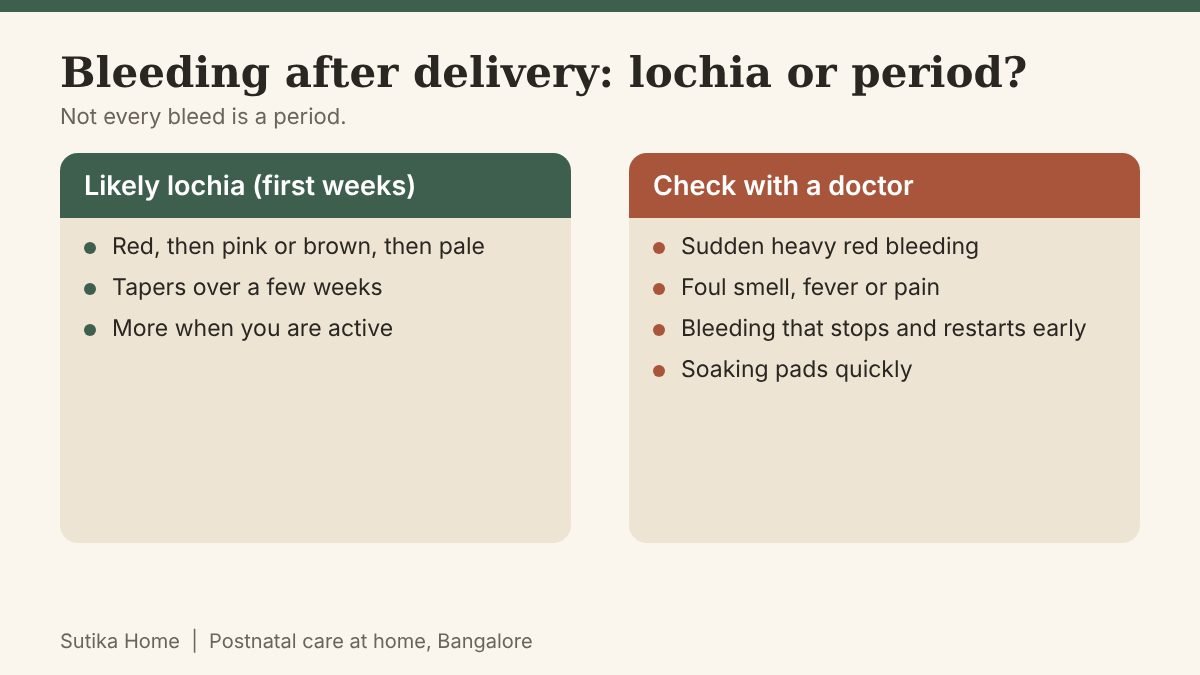
In the first weeks after delivery you will bleed whether or not you had a normal delivery or a C-section. This is lochia, the discharge from the uterus as it heals. It starts red, fades to pink or brown, then turns yellowish-white, and usually tapers off over a few weeks. It is not your period. Our guide to postpartum bleeding (lochia) explains what is normal and when to call a doctor.
A true period comes after the lochia has stopped, and after your body has begun ovulating again. If bleeding stops and then returns very early, say a few weeks after delivery, it may be lochia flaring up with activity, or it may be something else such as retained tissue or an infection. A doctor can tell the difference, so mention it.
When do periods return after delivery?
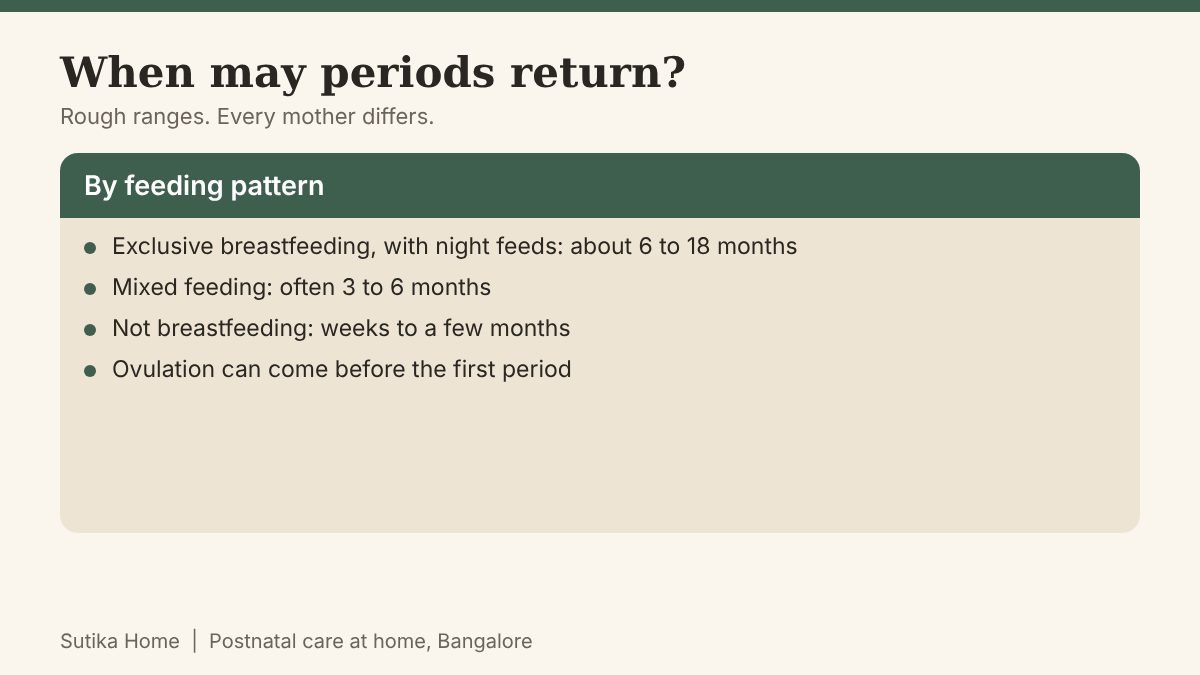
Timing depends mostly on how you feed your baby, and it varies a lot from person to person.
- Exclusive breastfeeding, including night feeds: periods may stay away for about 6 to 18 months, according to one Indian hospital resource.
- Mixed feeding, with formula or other foods alongside breast milk: periods often return around 3 to 6 months after delivery.
- Not breastfeeding: the range is wide, from roughly six weeks to a few months, and sometimes longer.
- Overall: the same resource cites NFHS-5 survey data indicating that about 65 percent of Indian mothers have their first period within six months of delivery.
The reason is prolactin, the hormone that makes milk. High prolactin suppresses ovulation, so while you feed often, day and night, ovulation tends to stay on hold. As feeds space out, the baby starts solids, or night feeds stop, the hormone balance changes and your cycle can restart.
You can get pregnant before your first period
This surprises many mothers. Ovulation comes before the period, so you can ovulate and conceive without ever seeing a period first. The NHS says you can get pregnant as early as three weeks after birth, even if you are breastfeeding and your periods have not returned.
Breastfeeding can work as a form of contraception, called the lactational amenorrhoea method, but only when strict conditions are met. According to the NHS, it is most likely to work when you feed only breast milk, your baby is under six months, and your periods have not returned. It stops being reliable if your baby is older than six months, has anything other than breast milk, if your periods return even as light spotting, if you drop night feeds, breastfeed less, or have longer gaps between feeds. Expressing may also make it less reliable. We cover contraception choices in our article on sex and contraception after delivery.
The NHS also advises waiting at least 12 months after giving birth before trying to conceive again, because a short gap between pregnancies can raise the risk of problems such as low birth weight. If you are considering another baby, talk to your doctor about the right interval for you, especially after a C-section.
What your first period may feel like
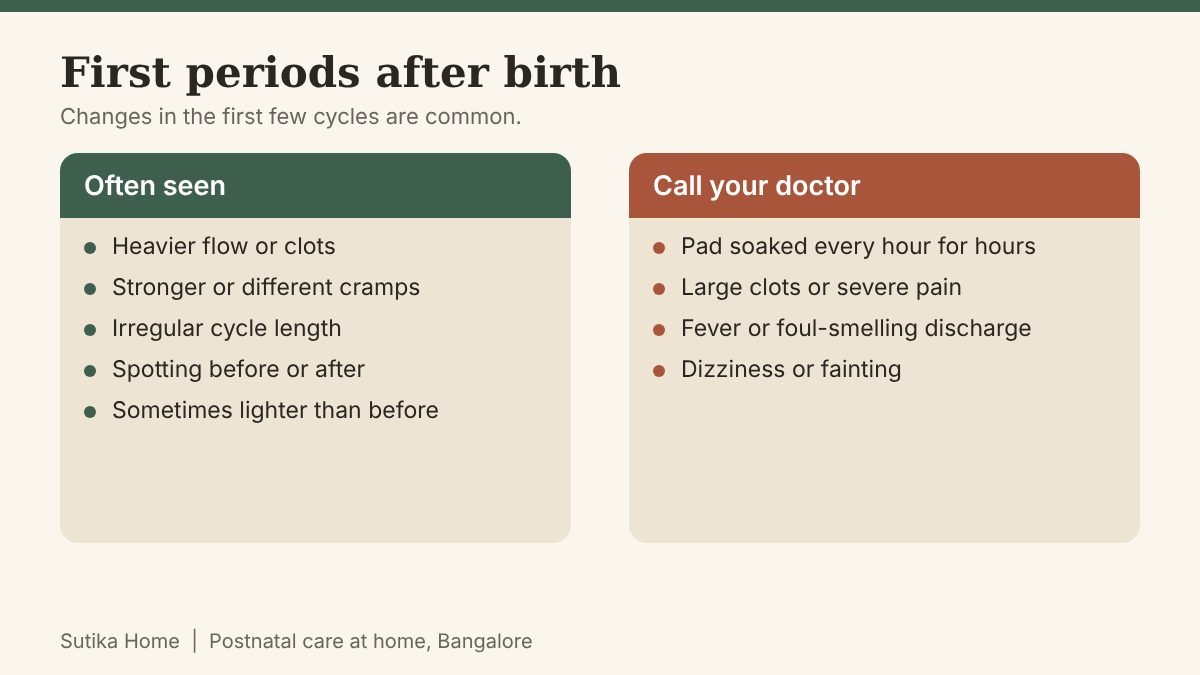
Many mothers find the first period different from before. Common experiences include:
- Heavier flow or clots, particularly if the uterus is still returning to its usual state.
- Stronger cramps, or cramps that feel different from pre-pregnancy ones.
- A longer or shorter cycle than you were used to.
- Spotting before and after the flow.
- A lighter period than before, which also happens and is not automatically a problem.
Cycles can be irregular for several months, especially while you are still feeding. The Kailash Healthcare resource notes that women with regular cycles before pregnancy may find them irregular at first and then settling. Don’t judge your cycle by the first one or two. Give it a few months, track the start dates in a diary or app, and take that record to your doctor if you are worried.
Why periods may be irregular after delivery
Several things can shift the pattern.
- Hormones are still adjusting, especially as feeding patterns change.
- Stress and poor sleep can delay or disturb ovulation.
- Conditions such as thyroid problems or PCOS can affect cycles, and postpartum thyroid changes are worth checking if you also have fatigue, hair loss or palpitations. Our guide on postpartum hair loss covers when hair loss needs a blood test.
- Anaemia from blood loss at delivery can leave you drained and affect how you cope with heavy periods. See our article on postpartum anaemia for signs and testing.
- Hormonal contraception can change bleeding patterns, including causing spotting or no bleed at all.
- A C-section scar, retained tissue or infection are less common reasons for abnormal bleeding and need a doctor’s assessment.

Managing your first periods at home
Practical steps make the first few cycles easier.
- Keep supplies ready. Pads or a period product that suits you, and spare underwear. Many doctors suggest pads rather than tampons or menstrual cups until your doctor has cleared you after delivery, particularly if you had stitches. Ask what is right for you.
- Rest and warmth. A warm compress on the lower tummy can ease cramps. Ask your doctor before taking pain relief, especially while breastfeeding.
- Eat iron-rich food and keep up fluids, since periods use iron. Pair dals, greens, ragi and dates with a source of vitamin C. Our postpartum diet guide has ideas.
- Notice your milk. Some mothers see a short dip in supply or a change in taste around the first periods. Feed more often if the baby asks, and the supply typically recovers.
- Track your cycle. Note the start and end dates, how heavy it was and any pain. It helps your doctor.
When to see a doctor
Please contact your doctor if you notice any of the following.
- Soaking through a pad every hour for several hours, or passing large clots.
- Severe pelvic or abdominal pain.
- Bleeding with fever, chills or a foul-smelling discharge.
- Feeling dizzy, faint, very breathless or having a racing heart, which can point to blood loss or anaemia.
- Very heavy or painful periods that keep returning, or bleeding that lasts much longer than a week.
- Bleeding between periods, or bleeding after sex, that does not settle.
- No period at all after you have stopped breastfeeding for a few months, or if you suspect you are pregnant.
- A recent C-section and bleeding that is heavy, or a wound that is red, painful or leaking.
If you are bleeding heavily and feel faint, seek emergency care and do not wait for an appointment.
Planning contraception before your period comes back
Because you can ovulate before the first period, it helps to plan contraception before you need it. The NHS says that straight after birth, including while breastfeeding, options include the contraceptive implant, injection, progestogen-only pill, condoms and an IUD or IUS. If an IUD or IUS is not fitted within 48 hours of birth, it is generally left until four weeks after delivery. Methods containing oestrogen, such as the combined pill, ring or patch, usually wait until at least six weeks if you are breastfeeding, and three weeks if you are not and have no clot risk factors. Your doctor will check which method suits your health and your feeding plan.
If you are unsure, bring it up at your postnatal check. You don’t need to wait for your period to return to ask.
How postnatal care at home fits in
The first periods often arrive in the same weeks that you are tired, feeding and unsure what is normal. A regular visit from a trained postnatal helper can give you someone to ask, to notice if you are looking pale or tired, and to remind you to see your doctor if bleeding seems unusual. They cannot diagnose a cycle problem or prescribe, and they should guide you to your doctor when something does not look right.
At Sutika Home, postnatal care at home offers daily visits from a trained therapist for 7, 14, 28 or 40 days, with care guided by a doctor and adapted to your recovery. Many mothers begin during the first forty days, when lochia is still settling. To learn how timing works, see our guide on when to book postnatal care, or contact us with your delivery date and area.
Frequently Asked Questions
When will I get my first period after delivery?
It varies. If you exclusively breastfeed, including at night, it may not return for 6 to 18 months. With mixed feeding it often returns around 3 to 6 months. If you do not breastfeed, it may come within weeks to a few months.
Can I get pregnant before my first period?
Yes. You can ovulate before the first period, and the NHS says pregnancy is possible from about three weeks after birth, even while breastfeeding. Breastfeeding works as contraception only under strict conditions, and not after your periods have returned.
Is my first period heavier than normal?
Often it is heavier or more painful for the first cycles, and sometimes it is lighter. If you soak a pad every hour for several hours, pass large clots, or feel faint, speak to a doctor.
Why is my period irregular after delivery?
Hormones are still settling, feeding patterns change, and sleep and stress play a part. Irregular cycles for a few months are common. See a doctor if it persists, or if you also have tiredness, hair loss or palpitations, as thyroid or anaemia checks may help.
Will my period affect my milk supply?
Some mothers notice a temporary dip or a fussy baby around the period. Feeding more often usually helps the supply recover. Speak to a lactation consultant if the dip lasts.
Can I use a menstrual cup or tampon after delivery?
Many doctors suggest pads at first, especially if you had stitches or a C-section. Ask your doctor when it is safe for you to switch.
How long should I wait before getting pregnant again?
The NHS advises waiting at least 12 months after giving birth before trying to conceive. After a C-section, ask your doctor about the right gap for you.
Leave a Reply