
In short: postpartum anaemia means your blood does not have enough haemoglobin to carry oxygen after delivery, usually because of iron lost through bleeding or low iron during pregnancy. Signs include unusual tiredness, breathlessness on small effort, a racing heart, dizziness, pale skin and headaches. A simple blood test confirms it. Treatment is usually iron tablets taken as your doctor prescribes, along with iron-rich food, and sometimes an iron infusion for more severe cases. Do not self-diagnose or start high-dose supplements without a test, and seek urgent help for fainting, chest pain or heavy bleeding.
Every new mother is tired. The baby wakes every two hours, the body is healing, and nobody has had a proper meal in days. That is exactly why anaemia after delivery gets missed. “I am just exhausted” is normal, so women, and sometimes doctors, do not look further.
But exhaustion that does not ease when you rest, a heart that thumps when you climb the stairs, or a head that spins when you stand up may be a sign that your iron is low. Here is why postpartum anaemia happens, how to recognise it, how it is tested and treated, how to eat and take iron so that it actually helps, and when to call your doctor. It is general information, not a diagnosis, and your own doctor decides what is right for you.
What is postpartum anaemia?
Haemoglobin is the protein in red blood cells that carries oxygen. Anaemia means the level is lower than it should be. Most anaemia after delivery is iron deficiency anaemia, where the body does not have enough iron to make haemoglobin.
Pregnancy already uses a lot of iron, because your blood volume rises and the baby draws on your stores. If you start the pregnancy with low iron, or if you bleed more than usual at delivery, you can come out of it with low reserves. Iron deficiency in women is common across India, and it is one reason doctors often prescribe iron and folic acid through pregnancy and afterwards. The WHO has a guideline on iron supplementation in postpartum women, and it exists because anaemia after birth is common enough to need attention.
Anaemia can be mild, with barely noticeable symptoms, or severe enough to affect heart rate, milk supply, mood and your ability to look after yourself and the baby. Either way, it is treatable.
Who is more likely to get it?
- Women who were anaemic during pregnancy.
- Those who lost more blood than usual at delivery, including after a C-section or a postpartum haemorrhage.
- Mothers who had closely spaced pregnancies, or twins.
- Women who follow a diet low in iron or who do not eat iron-rich food regularly.
- Women with heavy periods before pregnancy.
- Those with long-standing conditions such as thalassaemia trait or bleeding disorders, which should be discussed with the doctor.
If any of these apply, mention it at your first postnatal visit, so that your doctor can decide whether to check your blood. Our guide to postpartum bleeding explains how to tell normal lochia from heavy bleeding that needs a call.
Signs and symptoms of postpartum anaemia
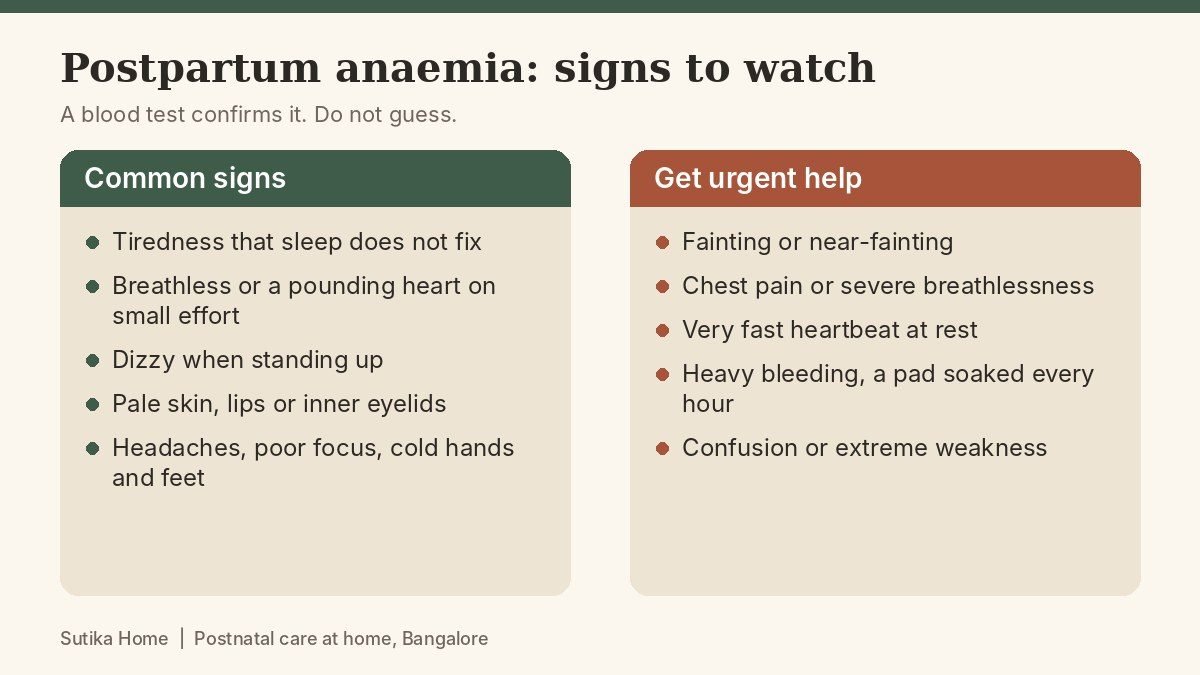
Symptoms often creep in. You may notice:
- Tiredness that sleep does not fix, beyond the normal newborn exhaustion.
- Breathlessness or a pounding heart when you do small things, such as climbing the stairs or carrying the baby.
- Dizziness or light-headedness when you stand up.
- Pale skin, pale inner eyelids, nails or lips.
- Headaches, trouble concentrating or feeling low and irritable.
- Cold hands and feet, or feeling cold more than others.
- Hair fall that seems more than the usual postpartum shedding. Our guide to postpartum hair loss explains the normal pattern.
- Reduced milk supply or poor sleep despite exhaustion in some women.
Many of these overlap with ordinary new-mother tiredness, low mood and thyroid changes, which is why a blood test matters more than guessing.
When to get tested and when to get urgent help
Ask for a blood test, usually a haemoglobin and often a ferritin or iron profile, if you have the symptoms above, if you were anaemic in pregnancy, if you had heavy blood loss, or if you simply feel much more exhausted than seems reasonable. Many hospitals check haemoglobin before discharge, but levels can drop further after you go home, so ask whether a repeat is needed.
Seek urgent medical help if you have:
- Fainting or near-fainting.
- Chest pain, severe breathlessness or a very fast heartbeat at rest.
- Sudden heavy bleeding, or bleeding that soaks a pad every hour.
- Confusion or extreme weakness.
These can be signs of serious anaemia or ongoing blood loss. Do not drive yourself, and do not wait to see if it passes.
How postpartum anaemia is treated
Iron tablets
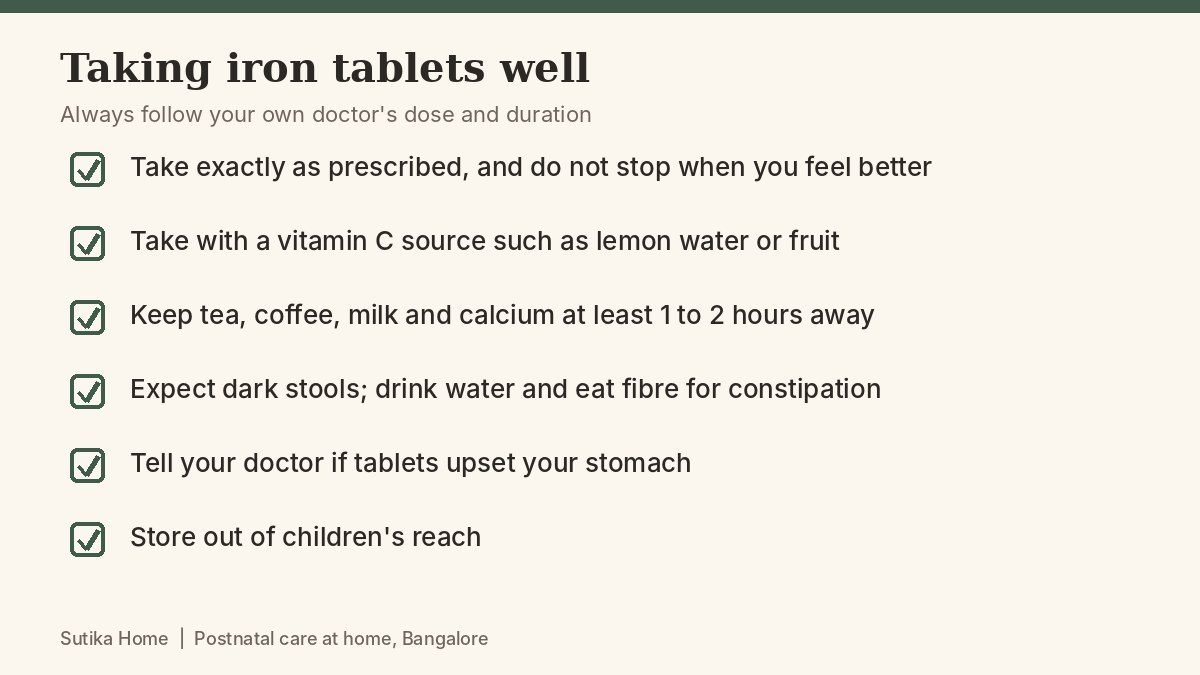
Oral iron is the usual first treatment for mild to moderate anaemia. Your doctor will tell you the type, the dose and how long to take it. Treatment commonly continues for weeks or months, even after you start to feel better, because the body needs time to rebuild its stores. Follow the plan and do not stop early. Take it exactly as prescribed, because more is not better and iron tablets are dangerous to children if swallowed, so keep them out of reach.
Tips that help many women tolerate them:
- Take iron with a source of vitamin C, such as a glass of lemon water or a piece of fruit. It helps absorption.
- Avoid taking iron with tea, coffee or milk, or with calcium tablets, because they reduce how much you absorb. Leave at least an hour or two between them, as your doctor advises.
- If tablets upset your stomach, tell your doctor, who may change the type, the dose or the timing.
- Expect dark or black stools. This is usual. Constipation is also common, so drink water and eat fibre. Our guide on postpartum constipation has more tips.
Iron infusion or injection
For more severe anaemia, if tablets do not work, or if you cannot tolerate them, your doctor may suggest intravenous iron, given in hospital or a clinic. It raises haemoglobin faster than tablets, but it is only for your doctor to decide.
Other causes
Not all anaemia is iron deficiency. Low vitamin B12 or folate, thyroid problems and other conditions can also contribute, which is another reason testing is worth doing before you start any supplement.
Eating for iron: what works in an Indian kitchen
Food alone may not correct a significant anaemia, but it helps both treatment and prevention. Our postpartum diet guide for India has detailed meal ideas. For iron, these are worth including, as long as they suit your doctor’s advice, any allergies and your family’s customs:
- Dals, rajma, chana, chickpeas and other pulses.
- Green leafy vegetables such as palak, methi and amaranth.
- Ragi, bajra and other millets.
- Dates, raisins, dried figs and jaggery in small amounts.
- Sesame seeds, nuts and seeds such as pumpkin and flax.
- Eggs, fish and lean meat, if you eat them.
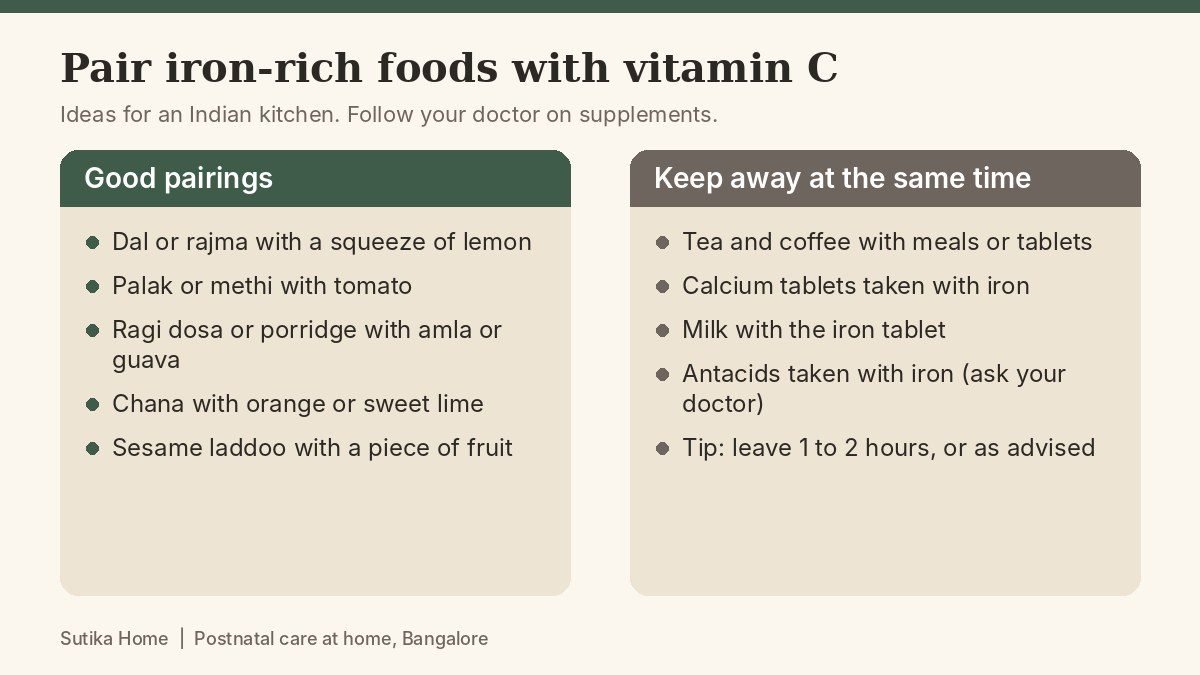
Pair these with vitamin C: lemon squeezed on dal, amla, guava, oranges or tomatoes at the same meal. Avoid tea or coffee with meals. Have it an hour before or after.
Many families offer special foods in the first 40 days. Where traditional foods and doctor-advised iron overlap, such as ragi, sesame, dates and dal, they work together. Where they do not, follow your doctor on supplements and diet. Our guide on the 40 days after delivery explains traditional postpartum care.
Rest, support and recovery
Anaemia makes everything harder: feeding, standing, carrying, even thinking. Rest is not laziness. Ask family to take over cooking and baby care during the day, and sleep when the baby sleeps when you can. If you have little help at home, our guide on postnatal care for nuclear families is designed for that.
A trained postnatal therapist cannot diagnose or treat anaemia, and no home therapy replaces a blood test or iron. What she can do is support your routine: reminding you to take tablets, to eat and to rest, helping with comfortable positioning, and noticing if you seem more breathless or pale than yesterday so that you can call your doctor sooner.
At Sutika Home, doctor-guided postnatal care at home runs for 7, 14, 28 or 40 days, with a trained Ayurvedic therapist visiting daily. Therapies begin only when your doctor is comfortable with them, and they are adapted or paused if your health needs it. If you have been told you are anaemic, say so on the first call so the plan can be built around your doctor’s advice. Our postnatal care at home guide explains what to expect, and families in the city can read our guide to postnatal care in Bangalore. You can also request a call back for a written quote.
Frequently Asked Questions
How common is anaemia after delivery?
It is common, particularly where iron deficiency in pregnancy is common, as it is in India. The only way to know whether you have it is a blood test, because the symptoms overlap with ordinary new-mother tiredness.
What is the main cause of postpartum anaemia?
Usually iron deficiency, from a low iron store before or during pregnancy, blood loss at delivery or both. Other causes include low vitamin B12 or folate and some blood disorders.
How long does it take to recover from postpartum anaemia?
Many women start to feel better within a few weeks of starting treatment, but haemoglobin and iron stores take longer to rebuild, often a few months. Your doctor will decide when to repeat the blood test.
Can I breastfeed if I am anaemic?
Yes. Iron tablets prescribed by your doctor are generally compatible with breastfeeding, but check with your doctor about the type and dose. Good food, fluids and rest help your recovery.
Which foods are best for postpartum anaemia?
Dals, pulses, leafy greens, ragi and other millets, dates, sesame, eggs, fish and meat if you eat them. Pair them with vitamin C and avoid tea or coffee with meals.
Do iron tablets cause black stools and constipation?
Yes, dark stools are common and not harmful, and constipation is a frequent side effect. Drink water, eat fibre and tell your doctor if it is troublesome. Never ignore black, tarry, foul-smelling stool with abdominal pain. That needs a doctor.
Can jaggery or dates cure anaemia?
They contain some iron and fit well in a postpartum diet, but they are not enough to treat anaemia on their own, and large amounts add sugar. Use them as part of a plan from your doctor.
When should I see a doctor?
Ask for a blood test if you have persistent tiredness, breathlessness, dizziness or a racing heart, and seek urgent help for fainting, chest pain or heavy bleeding.
Leave a Reply