

In short: there is no set date for when it is safe to have sex after delivery. Many doctors suggest waiting until bleeding has stopped and any stitches or C-section wound feel comfortable, and the six-week postnatal check is a common time to ask. The NHS says there are “no rules”, so go by comfort, not the calendar. Dryness is common while breastfeeding, and a water-based lubricant helps. You can get pregnant from about three weeks after birth, even before a period, so plan contraception early. See a doctor if pain continues.
Few topics are harder to bring up with your doctor, your partner or your mother than this one. Yet it is on the minds of most couples in the weeks after a baby arrives. When is it safe? Will it hurt? What if I do not want to? What about another pregnancy?
This guide answers those questions plainly. It covers when to start, what to expect physically and emotionally, how to make the first time easier, contraception, and the signs that mean you should see a doctor. It is general information, not a diagnosis, and your own doctor can give advice based on your delivery and recovery.
How soon can you have sex after delivery?
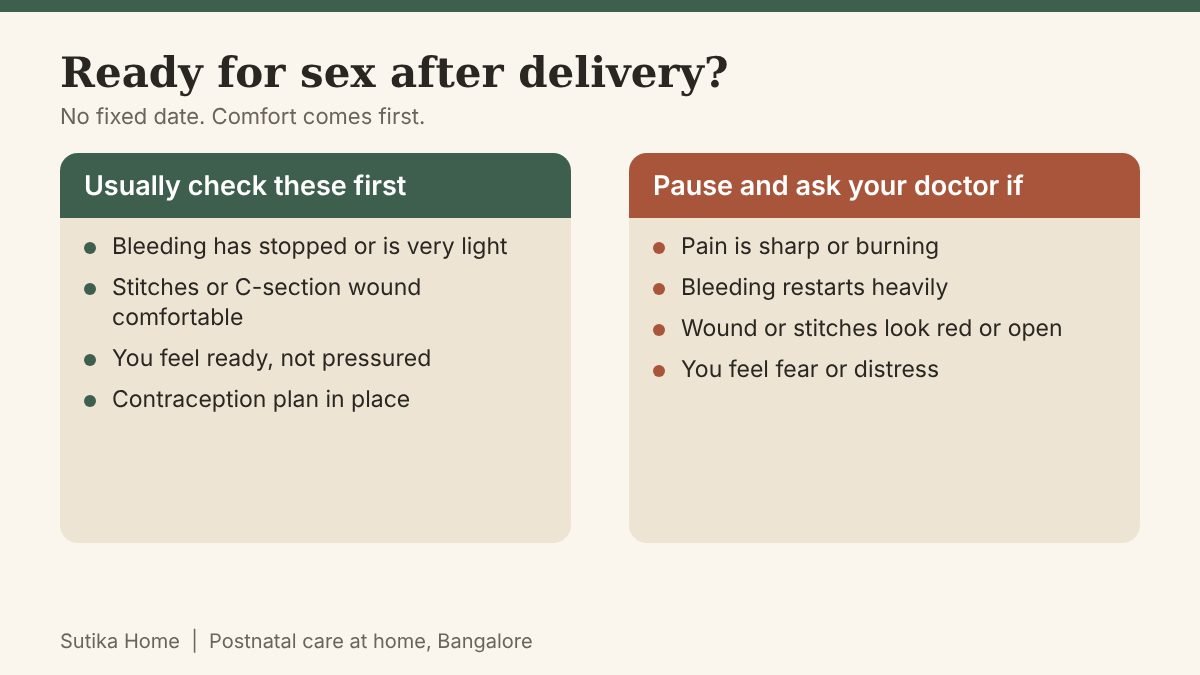
There is no universal date. The NHS states there are no rules about when to restart, and advises not to rush, since you will probably be sore and tired. Many doctors in India and elsewhere suggest waiting until:
- Your postpartum bleeding (lochia) has stopped or become very light.
- Any stitches from a tear or episiotomy have healed and no longer feel tender.
- A C-section wound feels comfortable, and your doctor is happy with how it is healing.
- You feel ready, physically and emotionally.
Often the doctor reviews your recovery at around six weeks, and that visit is a good moment to ask directly. If pain with sex continues at your six-week check, the NHS advises seeing your doctor. Do not feel you must wait until six weeks if you feel ready and comfortable, and do not feel pushed to begin on that day if you are not.
Read about what is normal with bleeding in our guide to postpartum bleeding, and about healing in our article on stitches after normal delivery. If you had a caesarean, the C-section recovery guide explains what to expect.
Why sex may feel different
Many mothers are surprised by how different things feel. This is common and usually improves.
Vaginal dryness
Oestrogen levels are lower after birth, especially while breastfeeding. The NHS notes that hormonal changes can make the vagina drier than usual, and recommends a personal lubricant from a pharmacy, especially at first. A water-based lubricant is generally a safe choice, and your doctor can advise if dryness continues.
Soreness or pain
Tears, an episiotomy, a healing scar or tight pelvic floor muscles can cause pain. The NHS suggests that if penetration hurts, you should stop and tell your partner, and that sex without penetration is an option. Gentle self-exploration with your own fingers first can help you check whether sex will be comfortable. If pain is sharp, burning or persists, speak to a doctor. Pelvic floor physiotherapy can help, and our guide to pelvic floor exercises after delivery explains when and how to begin.
Low desire
Exhaustion, broken sleep, a changed body, feeding demands and hormones can all lower desire. A baby who needs your body all day can leave you feeling “touched out”. This is very common and usually temporary. It is not a sign that something is wrong with you or the relationship.
Leaking, bladder or bowel changes
Some mothers leak urine during sex or feel a heaviness. That is worth mentioning to a doctor, since pelvic floor rehabilitation often helps.
Breast tenderness or leaking milk
Milk may let down during arousal. That is normal. Feed or express beforehand if you want to feel more comfortable, and use a towel nearby.
How to make the first time easier
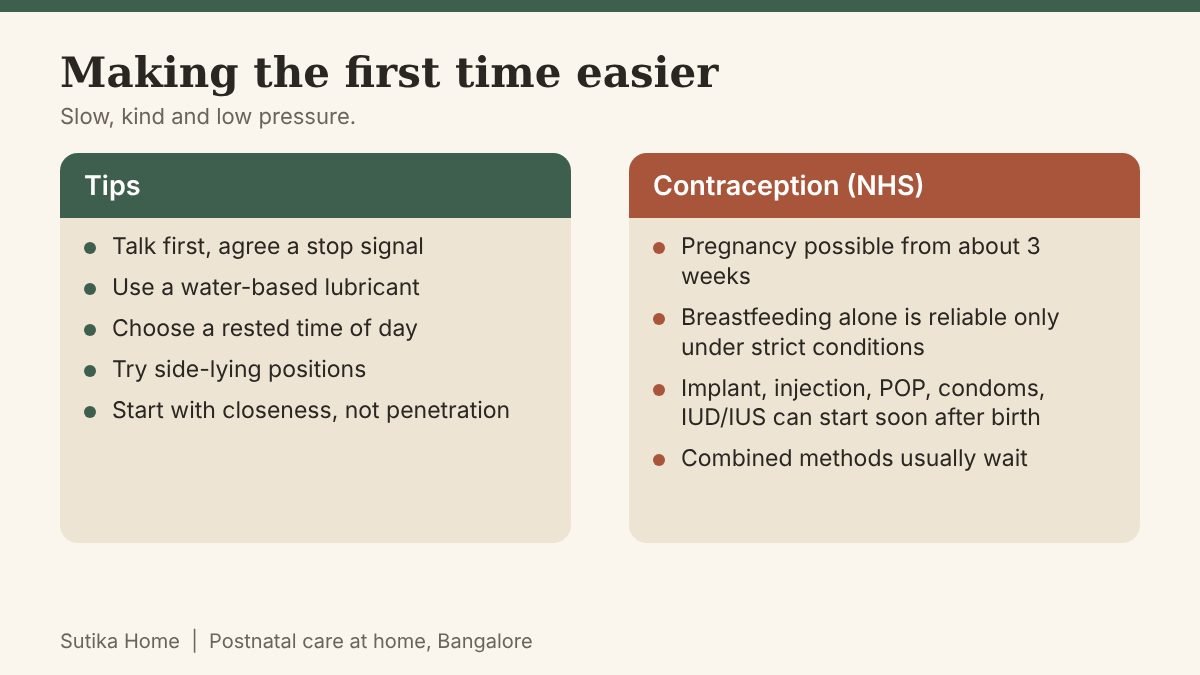
- Talk first. Say what you want, what worries you and what you are not ready for. A kind, honest conversation matters more than any technique.
- Choose your moment. Pick a time when the baby has fed and settled and you are not exhausted, which may be daytime rather than night.
- Start slowly. Kissing, cuddling, massage and other intimacy that does not involve penetration can rebuild closeness without pressure.
- Use lubricant. Keep it within reach.
- Pick a comfortable position. Side-lying or a position where you control depth and pace often feels better than lying flat.
- Stop if it hurts. Pain is a signal to pause, not to push through.
- Go easy on expectations. The first time may not be the best, and that is fine.
A cold or warm compress, rest, and a warm bath, if your doctor has allowed it, can help you relax. Our guide to postnatal massage at home explains how traditional massage is paced for recovery.
Contraception: plan early
Many couples do not realise how soon pregnancy is possible. The NHS says you can get pregnant three weeks after birth, even if you are breastfeeding and your periods have not returned, so use contraception every time you have sex unless you want to conceive. Our article on the first period after delivery explains why ovulation comes before the first period.
According to the NHS, these options can be started straight after birth, including while breastfeeding: the contraceptive implant, injection, progestogen-only pill, condoms and female condoms, and an IUD or IUS. If an IUD or IUS is not fitted within 48 hours of birth, it usually waits until four weeks after delivery. The combined pill, vaginal ring and patch are usually considered from three weeks if you are not breastfeeding and have no clot risk factors, and are usually delayed until at least six weeks when breastfeeding. A diaphragm or cap can be used from about six weeks, and may need refitting.
Breastfeeding can work as contraception, called the lactational amenorrhoea method, but only if you feed only breast milk, the baby is under six months and your periods have not returned. It becomes unreliable if the baby has other foods or a dummy, you drop night feeds, feeds are less frequent, or periods return, even as spotting. If in doubt, add another method.
The NHS also advises waiting at least 12 months after birth before trying to conceive again. Your doctor can recommend what is safest for you, especially after a caesarean or a complicated pregnancy.
Contraception choices depend on your health, feeding plan and preferences. Please discuss them with your doctor or a family planning clinic before you start.

Emotional readiness matters as much as physical
Some mothers feel ready within weeks. Others need months. Both are normal. Factors that can slow the return of desire include sleep loss, worries about the baby, body image, pain and mood changes. If low mood, anxiety or fear is making intimacy feel impossible, it is worth looking at those directly. Our guides on baby blues vs postpartum depression and postpartum anxiety explain when to seek help.
For partners, patience and practical help count. Taking the night feed, cooking, bathing the baby and asking “what would feel good today?” do more for closeness than pressure ever will. Saying no is allowed at any point, and consent matters in the same way it did before the baby.
When to see a doctor
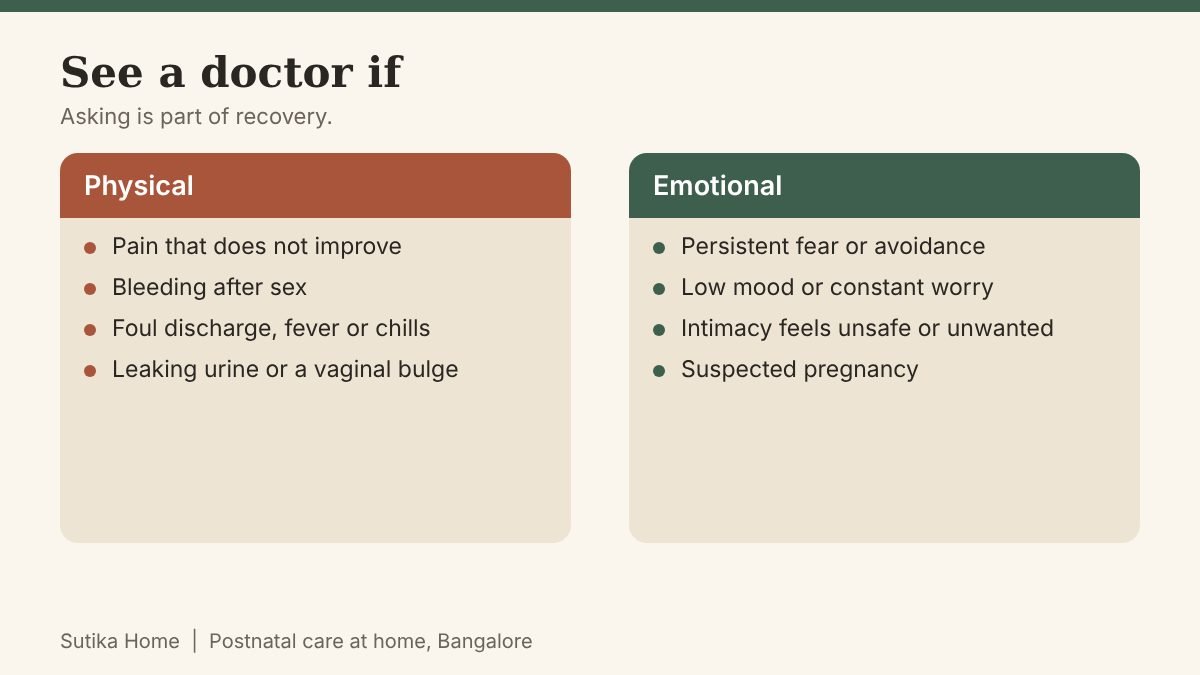
- Pain during sex that does not improve over several attempts, or that is sharp or burning.
- Fresh bleeding after sex, or bleeding that has restarted heavily.
- A foul-smelling discharge, fever or chills, or lower abdominal pain.
- A stitched area that opens, swells, leaks or looks red.
- A C-section wound that is red, painful, or discharging.
- Persistent leaking of urine, a dragging heaviness or a bulge in the vagina.
- Fear, panic or distress about sex, or if intimacy has become unsafe or unwanted.
- Signs of a possible pregnancy, such as a missed period when your cycle had returned.
Your doctor has heard all of this before, and asking is a sign of taking care of yourself.
How postnatal care at home can support recovery
Healing from birth takes longer than most people expect, and intimacy often sits at the bottom of the list. A trained helper cannot give medical clearance for sex, which is your doctor’s decision. What regular postnatal care can give you is rest, nourishing food guidance and a calm place to ask questions about recovery that you might not raise with anyone else.
At Sutika Home, postnatal care at home is a daily visit from a trained therapist for 7, 14, 28 or 40 days, with traditional Ayurvedic therapies and diet guidance, guided by a doctor and adapted to your delivery. If you have questions about when to resume intimacy, we encourage you to ask your own doctor, and our team will plan therapies around your healing. To find out more, contact us or read our guide on what happens during a postnatal care home visit.
Frequently Asked Questions
How long after delivery can I have sex?
There is no fixed time. Many doctors suggest waiting until bleeding has stopped and stitches or a C-section wound have healed, and the six-week check is a common time to ask. The NHS says there are no rules, so go by comfort and readiness.
Is it normal for sex to hurt after having a baby?
Some discomfort is common, especially from dryness, healing tissue or tight pelvic floor muscles. Use lubricant, go slowly and stop if it hurts. See a doctor if pain continues, particularly at your six-week check.
Can I get pregnant if I have not had my period yet?
Yes. You can ovulate before your first period, and the NHS says pregnancy is possible from about three weeks after birth, even if you are breastfeeding.
Does breastfeeding act as birth control?
Only if strict conditions are met: you feed only breast milk, the baby is under six months, and your periods have not returned. Night feeds and frequent daytime feeds also matter. Once any of these change, use another method.
Why do I have no desire for sex after having a baby?
Tiredness, hormones, feeding demands, body image and stress all lower desire. It usually returns with time, rest and support. If low mood or anxiety is part of the picture, speak to a doctor.
Can I have sex after a C-section sooner than after a normal delivery?
Not necessarily. Healing differs, and the timing depends on your wound, bleeding and comfort. Follow your surgeon’s advice.
Which contraception is safe while breastfeeding?
Options such as condoms, the implant, injection, progestogen-only pill and IUD or IUS are commonly used, while oestrogen-containing methods are usually delayed until at least six weeks. Your doctor will advise what fits you.
Leave a Reply