

In short: postnatal care after a second baby is different from the first time because you are recovering and caring for a toddler at once. Your body may feel more familiar with labour, but healing still takes weeks. The main change is that nobody is cancelling your older child’s routine for you. Plan help for the first two weeks, protect time to rest, keep your follow-ups, and book skilled care for your recovery so family help can go to the older child. This guide covers what usually changes and how to plan for it.
Many mothers expect the second time to be easier. In some ways it is. You know what a newborn looks like, you are less afraid of handling a tiny baby, and you may feel more confident about feeding. But the second postnatal period has its own pressure. There is a small person asking for attention while you are sore, leaking, short of sleep and trying to feed a newborn.
This article does not claim that every second recovery follows a pattern. Some mothers find the second delivery easier, some harder. The goal is to help you plan for the most common differences and to know when to ask your doctor.
What can feel different the second time
A few things are commonly reported, though experiences vary.
Afterpains, the cramping as the womb contracts back to size, are often described as stronger with later babies, particularly during feeds. They usually settle within a few days. If the pain is severe or comes with fever or heavy bleeding, call your doctor rather than assuming it is afterpains.
Recovery from a vaginal delivery may be quicker for some mothers, but stitches, tears or tiredness still need time. If you had a C-section the first time, you may be planning another, or a vaginal birth after caesarean. Either way, your doctor will guide your recovery. Our C-section recovery guide covers what is normal in the first weeks.
You may feel more tired because you cannot nap when the baby naps. A toddler does not nap on your schedule. Many mothers also feel guilt about the older child, which adds emotional weight on top of the physical recovery.
Feeding is often easier mechanically, because you have done it before. That does not mean it will be free of problems. Latch, supply and pain can still need help. See our guide on breastfeeding support at home when you need it.
The biggest change: three sets of needs
In the first weeks with your first baby, the mother and baby are the focus. With a second, the household has three centres of need: the baby, the older child and the mother. The mother’s recovery is the one most likely to slip, because everyone assumes she knows what she is doing.
Tell your family plainly that you still need to recover. Our guide to what a new mother really needs after delivery is a useful summary to share. Rest is not selfish. A mother who is healing well can be present for both children.
Prepare your older child
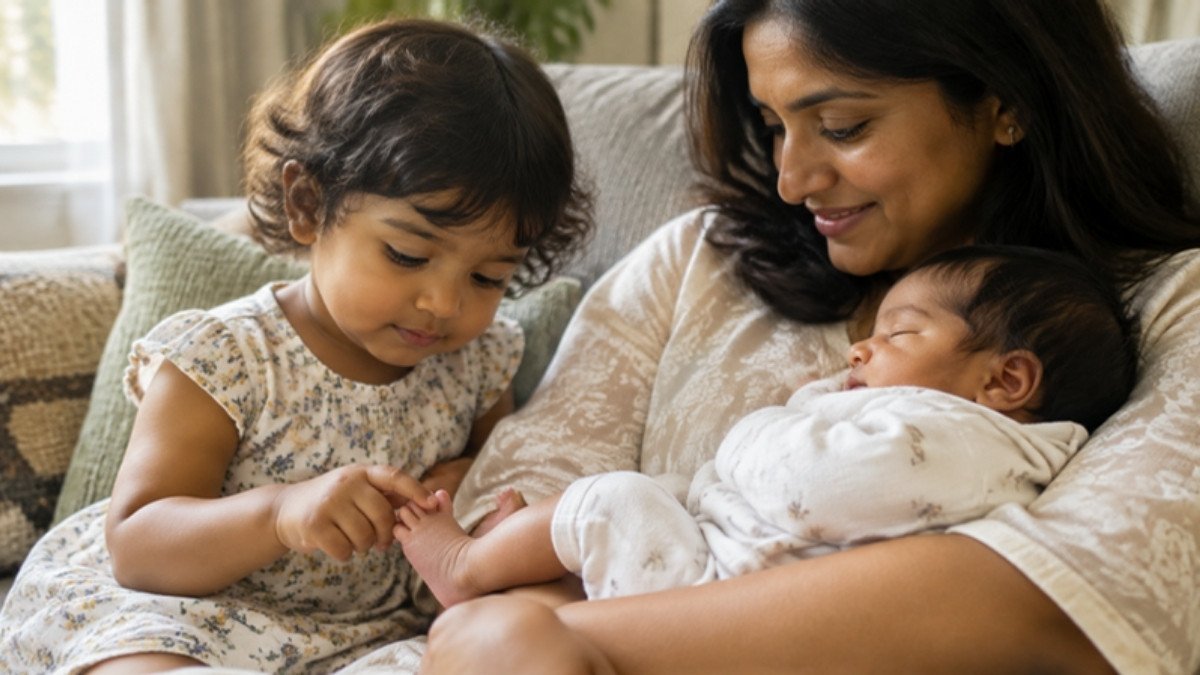
Preparation helps everyone. Talk about the baby in simple terms, and let your child help pack the hospital bag or choose a small gift for the baby. If you will be in hospital for a few days, tell your child who will take care of them, and keep a familiar routine.
When you come home, give your older child some individual attention early, even for a few minutes. Let your partner or a grandparent handle the bigger routines, like bath and bedtime, so your child does not feel replaced by the baby. Expect some regression, like clinginess or toilet accidents. This is common and usually passes.
Do not expect your toddler to be gentle with a newborn at once. Teach them one simple rule, like “gentle hands”, and never leave the baby alone with a young child.
Who does what: a simple split
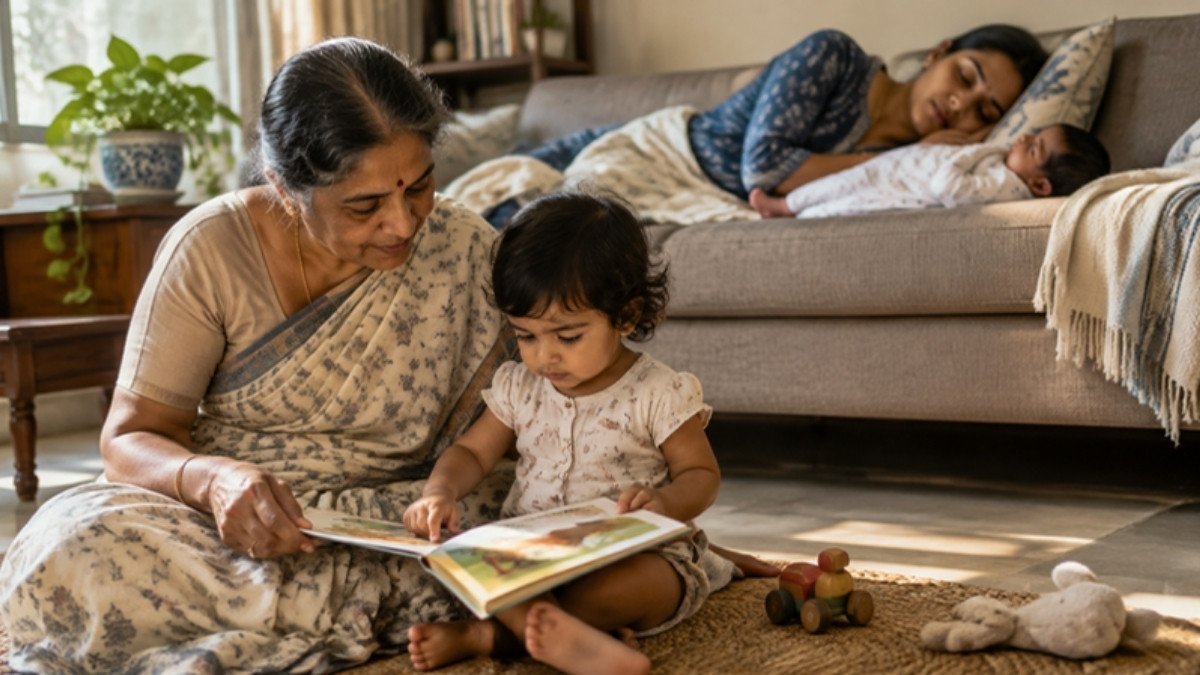
It helps to give each person one clear job. A partner or relative takes the older child’s routine: meals, school or play-school pick-up and drop, bath and bedtime. A helper or cook handles the kitchen. The mother focuses on feeding, resting and recovery. A trained therapist, if you book one, looks after the mother’s recovery care, such as massage, herbal bath and food guidance.
This split matters because it stops the common trap where the mother’s care is the first thing dropped when the day gets busy. Family help often goes to the older child, which is sensible. That makes it more important to arrange recovery care separately.
If you are not sure who does what, our postnatal care therapist vs nanny guide explains the roles, and our postnatal care checklist helps you list what to arrange.
How much postnatal care do you need the second time?
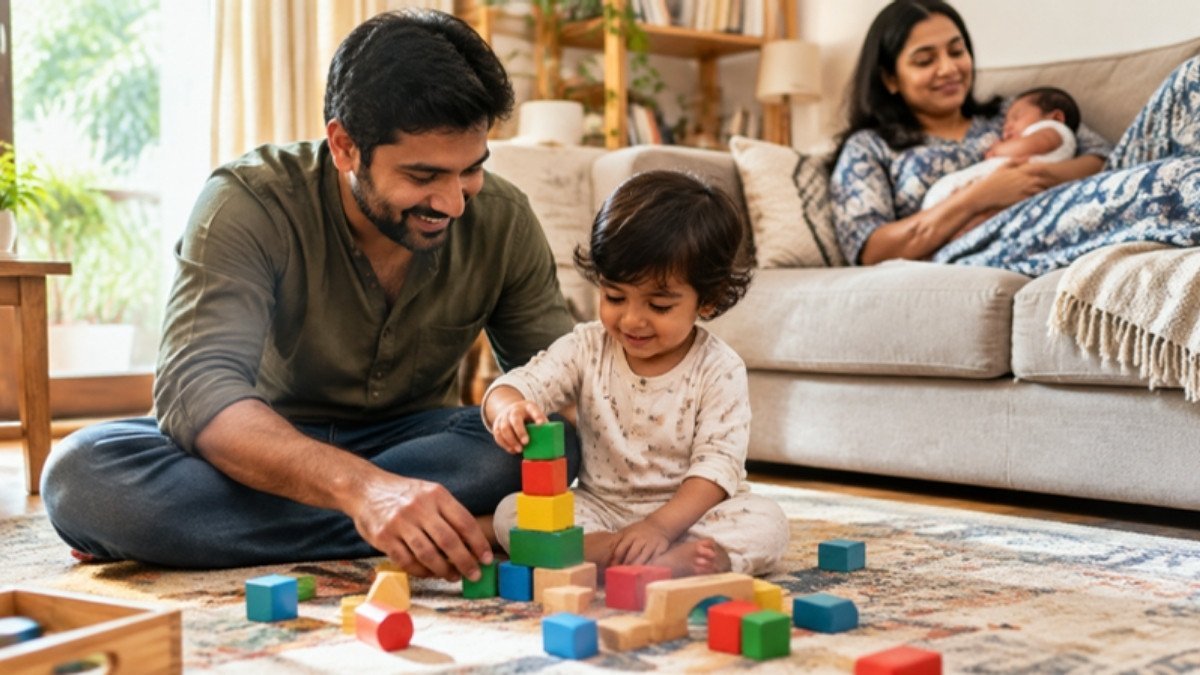
There is no rule that you need less care because it is your second baby. The right length depends on your delivery, your recovery and the help you have at home. Some mothers choose a shorter plan because they are more confident. Others choose a longer plan because they have less time to rest.
If you have a toddler at home, a plan that covers the first two weeks can be useful, since that is usually the hardest stretch. If you had a C-section or a long labour, four weeks may suit you better. The traditional 40 days fits families who want the complete confinement. You can add days if you need to. Ask your provider how that works.
Care costs vary. Read what affects the cost of postnatal care before comparing quotes.
Fitting in massage, bath and diet
Traditional postnatal care, such as oil massage, a herbal bath and warm food, can fit around a toddler’s day if you plan the timing. Book visits for when your older child is at school or having a nap, or when another adult is minding both children. Do not try to have a massage while a toddler is knocking on the door.
Each therapy has safety checks. See our guides to postnatal massage at home and the postnatal herbal bath for who should wait. If you are recovering from a C-section, ask your surgeon before massage near the abdomen or binding.
Food matters too. When you are chasing a toddler, it is easy to skip meals. Keep simple, warm snacks within reach and ask someone to prepare lunch. Our postpartum diet guide lists light foods for the first weeks.
Protect your rest
You will not get long, uninterrupted sleep. You can still reduce the damage. Sleep when the baby sleeps if the toddler is occupied, ask your partner to take one longer night block for you, and say no to visitors for the first week or two. Ask visitors to bring food instead of holding the baby while you do chores.
Physical rest matters as well. Avoid lifting your toddler if you had a C-section, since lifting strains the wound. Sit down to cuddle and read. Teach your toddler to climb up beside you. Your doctor can tell you when lifting is safe.
Watch your mood
The second time can bring a different emotional picture. Some mothers feel guilty, anxious about the older child or sad about the change in the family. These feelings are common in the first two weeks. If low mood lasts, gets worse, stops you eating or sleeping, or includes thoughts of harming yourself or the baby, speak to your doctor straight away. The WHO recommends screening for postnatal depression and anxiety and encourages partner involvement (WHO, 2022).
If you had a hard first experience, tell your doctor early. A history of postnatal depression or a difficult delivery is useful information, and it means you may benefit from extra support from the start.
Do not skip the follow-up
WHO advises at least three further postnatal checks in the first six weeks, at 48 to 72 hours, at 7 to 14 days and at six weeks. A second baby does not change that. It is tempting to skip appointments when you are juggling two children, so plan ahead. Ask a relative to mind your older child on the day, or ask whether the clinic offers a home visit.
Our body after delivery guide explains what to expect week by week.
When to get medical help
Call your doctor or go to a hospital for heavy bleeding, fever, foul-smelling discharge, a red or leaking wound, severe pain, a swollen painful calf, chest pain, breathlessness, a severe headache or vision changes, or thoughts of harming yourself or the baby. Do not assume that because you have done this before, a symptom is normal. Home therapy is not emergency care.
How Sutika Home helps
Sutika Home provides doctor-guided, Ayurveda-informed postnatal care at home. A trained therapist visits daily at a time that suits you, for 7, 14, 28 or 40 days, after a normal delivery or a C-section. That gives you time each day that is about your recovery while family help goes to your older child. Tell us your area and the visit times that work around your toddler, and we will confirm whether we can serve you. You can request a call back.
Conclusion
Postnatal care after a second baby is mostly a planning problem. The medical basics stay the same, and the extra pressure comes from having another child to look after. Prepare your older child, give each person one clear job, protect the mother’s rest and keep your follow-ups. Treat your own recovery as seriously as you did the first time.
Frequently Asked Questions
Is postnatal recovery easier after a second baby?
For some mothers it is, and for others it is harder. You may feel more confident, but you also have a toddler to care for, which leaves less time to rest. Plan your help as carefully as you did the first time.
Do I need postnatal care if this is my second baby?
It depends on your delivery, your recovery and the help available at home. Many mothers still book care because they have less time to rest. A shorter plan can cover the toughest weeks.
Are afterpains worse with a second baby?
Many mothers report stronger afterpains with later babies, especially during feeds. They usually settle within a few days. Call your doctor if the pain is severe or comes with fever or heavy bleeding.
How do I manage a toddler after delivery?
Give your partner or a relative the toddler’s routine, and keep some individual time with your child each day. Avoid lifting if you had a C-section, and never leave the baby alone with a young child.
How long should postnatal care last after a second baby?
There is no fixed rule. Many families choose 7 or 14 days to cover the hardest stretch, while others prefer 28 or 40 days. Ask your provider if you can add days later.
Can I have a postnatal massage with a toddler at home?
Yes, if someone else minds both children during the session. Book it when your older child is at school or napping. Check with your doctor first, especially after a C-section.
When should I call my doctor?
Call for heavy bleeding, fever, foul-smelling discharge, a red or leaking wound, severe pain, a swollen calf, chest pain, breathlessness, severe headache or vision changes, or thoughts of self-harm.
Leave a Reply