

In short: postnatal care for working mothers works best when it is planned in three stages. Use the first weeks after delivery for recovery with proper help at home, use the middle weeks to build a feeding and childcare routine, and use the last weeks of leave to rehearse the working day. Book recovery support early, fix who looks after the baby during office hours, and check your leave, crèche and flexibility options before you return. A home therapist supports your recovery, but she is not a full-time baby carer, so daytime childcare needs its own plan.
Many working mothers in India spend the first month of leave simply surviving, then wake up one morning with six weeks left and a long list: childcare, milk storage, a wardrobe that fits, a manager who wants a handover call. The body is still recovering. The mind is already at the office.
Below you’ll find what to arrange before delivery, how to use your leave, how to handle feeding, who does what once you are back, and what to watch in your own health. It is general information, and your doctor’s advice about your recovery always comes first.
Why working mothers need a recovery plan as well as a leave plan
Leave dates tell you when you must be back. They do not tell you whether your body, your sleep or your breastfeeding routine will be ready. A mother who had a C-section, who is still anaemic, who has stitches that are slow to heal or who is not sleeping may need more time or a gentler return than the calendar allows.
Under India’s Maternity Benefit (Amendment) Act, 2017, women with fewer than two surviving children are eligible for 26 weeks of paid maternity leave, according to the Ministry of Labour’s clarification, and the Act also mentions provisions for work from home for nursing mothers. Establishments with 50 or more employees must provide a crèche facility. What your employer actually offers can vary, so check your own HR policy early and ask about phased returns, work from home and flexible hours before you go on leave.
Before delivery: what to arrange
- Book postnatal care at home. Recovery support is the first thing to disappear when the baby comes, and good providers fill their schedules weeks ahead. Our timeline for when to book postnatal care explains when to start.
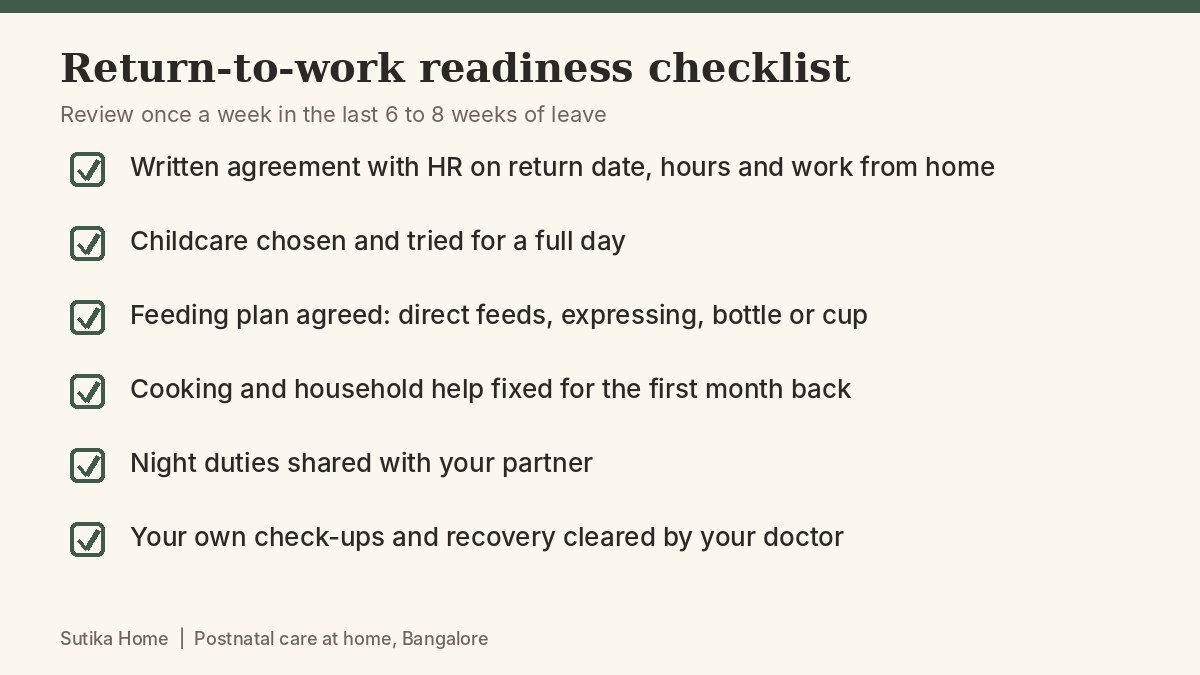
- Talk to your manager and HR about your return date, flexible hours and work from home. Put anything agreed in writing.
- Shortlist childcare. Decide whether it will be a family member, a nanny, a crèche or a mix, and check whether your office has a crèche.
- Fix household help. Cooking, cleaning and laundry decide how much you can rest.
- Agree on night shifts. Who handles the 2 am feed or the 4 am cry matters more for your recovery than any gadget. Our notes on postpartum sleep give practical ideas.
Our postnatal care checklist for first-time mothers is a good companion list.
Weeks 1 to 6: recover first, work later
Treat the first six weeks as recovery, not preparation for work. Your body is healing from delivery, your hormones are shifting, and feeding is being established. Many families find that a dedicated recovery plan for the first 14, 28 or 40 days gives the mother permission to rest.
Recovery is not only physical. Tiredness, mood swings and worry about work can pile up. If low mood does not lift, our guide on baby blues vs postpartum depression explains when to ask for help. It is common to feel guilty about work during this time, and that feeling is better talked about than carried alone.
Keep every postnatal check-up and ask your doctor when it is safe to restart exercise, driving and desk work for long hours. After a C-section, our C-section recovery guide covers movement, wound care and what to avoid.
Weeks 6 to 12: build the routine
Once recovery is steady, start rehearsing. This is the stage where most plans succeed or fail.
Feeding and expressing milk
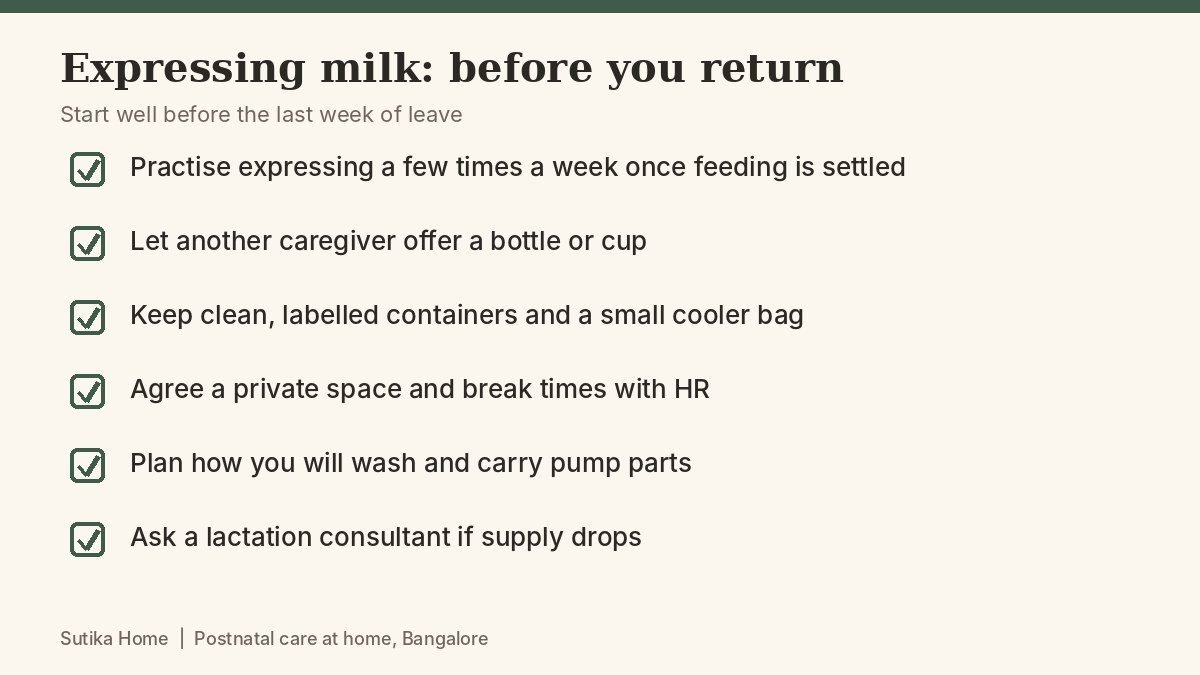
WHO recommends exclusive breastfeeding for the first six months and continued breastfeeding alongside other foods after that. Many working mothers do both: they feed directly when at home and express milk at work. If you plan to do this, start practising a few weeks before your return date, so the baby is used to taking a bottle or cup from another caregiver, and you know how much milk you can express at a sitting. Our guide on breastfeeding support at home covers latch, supply and when to call a lactation consultant.
Talk to your employer about a clean, private space and enough breaks to express milk. If your establishment has 50 or more employees, a crèche facility is required. Ask HR how breaks, crèche access and any work from home provision work in your office.
Childcare trial runs
Before your last week of leave, try the planned childcare arrangement for a few mornings or one full day. Notice what goes wrong. Does the baby refuse the bottle? Does the caregiver know the feeding schedule? Does the handover at the door take too long? It is far easier to fix this while you are still at home.
A realistic weekday plan
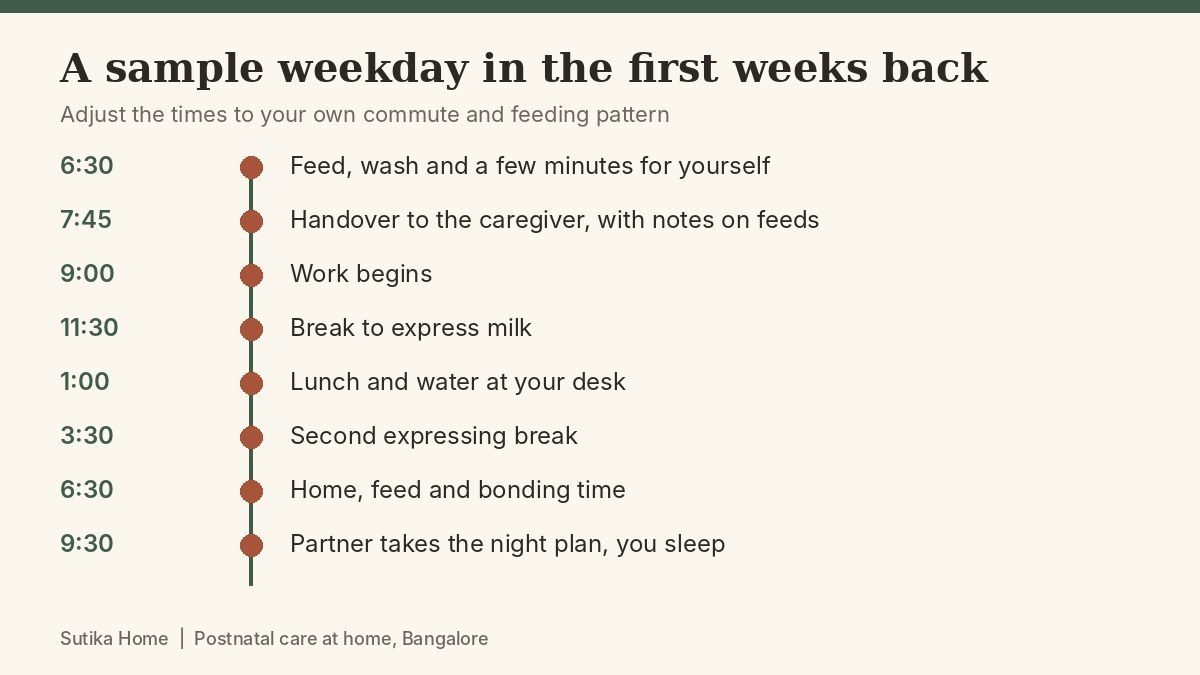
Write out one full weekday, hour by hour, from waking up to bedtime. Include feeds, commute, meetings, expressing, dinner and sleep. If it does not fit on paper, it will not fit in practice. Remove or share tasks until it does.
Who does what once you are back
A common mistake is to assume the person who helped with recovery will also care for the baby during working hours. Roles need to be clear.
- A postnatal therapist focuses on the mother’s recovery: massage, herbal bath, tummy binding, diet guidance and general support. She does not provide full-time baby care and is not a nanny. Our guide on postnatal care therapist vs nanny explains the difference.
- A nanny or crèche looks after the baby during office hours.
- Family members cover the gaps: evenings, weekends, sickness days.
- Your partner shares night duty, school or crèche runs and household tasks, instead of “helping”.
If you live in a nuclear family, with no elders at home, these roles need even more detail. Our guide on postnatal care for nuclear families is written for exactly that situation.
Looking after your own health once you are back
Many mothers go back to work before they are fully recovered, even if everything looks fine from outside. Keep these in mind:
- Sleep. Broken nights do not stop at six months. Protect at least one longer stretch where you can, and share night waking.
- Food. Pack lunch and snacks, and keep water on your desk. If you are breastfeeding, you need extra fluids. Our postpartum diet guide for India has ideas.
- Back and posture. Long hours at a desk, plus feeding, can strain the back. Short walks and posture breaks help, and our guide on back pain after delivery covers relief.
- Pelvic floor and core. Keep up your exercises. See pelvic floor exercises after delivery.
- Mood. If you feel persistently low, anxious or unable to cope for more than two weeks, talk to your doctor.
- Check-ups. Do not skip your own appointments for the baby’s.
Choosing the right length of home care
Plan length depends on your delivery, your support and your leave. A 7 or 14 day plan can suit mothers with strong family help and an uncomplicated delivery. A 28 or 40 day plan is often chosen after a C-section, with twins, or when the family has little help at home. Our guide on postnatal care cost explains what affects the price, and the postnatal care package guide helps you compare what is included.
At Sutika Home, doctor-guided postnatal care at home runs for 7, 14, 28 or 40 days, with a trained Ayurvedic therapist visiting daily at a time that suits the family. If you are returning to work, mention your date on the first call so visits can be timed around the part of the day that matters most for your recovery. For families in the city, our guide to postnatal care in Bangalore explains what to look for. You can request a call back and the care coordinator will give a written quote on the first call.
Frequently Asked Questions
When should a working mother start planning postnatal care?
Ideally in the second or early third trimester. Shortlisting providers by around 32 weeks and confirming by 34 to 36 weeks gives you time to compare, as our timeline guide explains. If the baby has already arrived, you can still book, with fewer options.
How long is paid maternity leave in India?
Under the Maternity Benefit (Amendment) Act, 2017, women with fewer than two surviving children are eligible for 26 weeks of paid leave, according to the Ministry of Labour. Rules differ for later children and for different employers, so check with your HR team.
Can I work from home after maternity leave?
The Act mentions provisions for work from home for nursing mothers, but there are no fixed details in the clarification, so it depends on the employer and the nature of the job. Ask HR early and get any agreement in writing.
Does a postnatal care therapist look after the baby while I work?
No. A postnatal therapist focuses on the mother’s recovery and does not provide full-time baby care. You will need a nanny, crèche or family member for working hours.
How can I keep breastfeeding after going back to work?
Many mothers feed directly at home and express milk at work. Practise expressing and bottle or cup feeding a few weeks before your return, plan breaks and storage, and talk to a lactation consultant if supply drops.
Is it too early to return to work at 12 weeks?
It depends on your delivery, recovery and support. Some women feel ready, and others need more time. If you had a C-section, are anaemic or have other health issues, discuss timing with your doctor.
What if my office has no crèche?
Establishments with 50 or more employees must provide one, according to the Press Information Bureau. If your workplace is smaller or has none, plan home or neighbourhood childcare, and ask about flexible timings.
How do I look after myself as a working mother?
Protect sleep where you can, eat regular meals, keep up pelvic floor and posture exercises, attend your check-ups and speak up if you feel low for more than two weeks.
Leave a Reply