
In short: some swelling in the feet, ankles and hands is normal after delivery, because your body is clearing the extra fluid it held during pregnancy. It usually peaks in the first week and settles over the next couple of weeks. Raising your legs, walking gently, drinking water and wearing loose footwear help. But sudden swelling of the face, hands or feet, swelling in only one leg, severe headache, vision changes, breathlessness or chest pain are not routine. Those can signal postpartum pre-eclampsia or a blood clot and need urgent medical help.
Many mothers expect the swelling to vanish the moment the baby arrives. Instead, they find their feet puffier on day three than they were at nine months. Rings will not fit. Slippers feel tight. A relative says “it’s just water”, another says “it’s the cold”, and nobody quite explains what is normal.
This guide covers why swelling after delivery happens, how long it lasts, what helps, how to tell ordinary fluid from a warning sign, and what traditional care can and cannot do. It is general information, not a diagnosis, and your own doctor decides what is right for you.
Why do feet and legs swell after delivery?
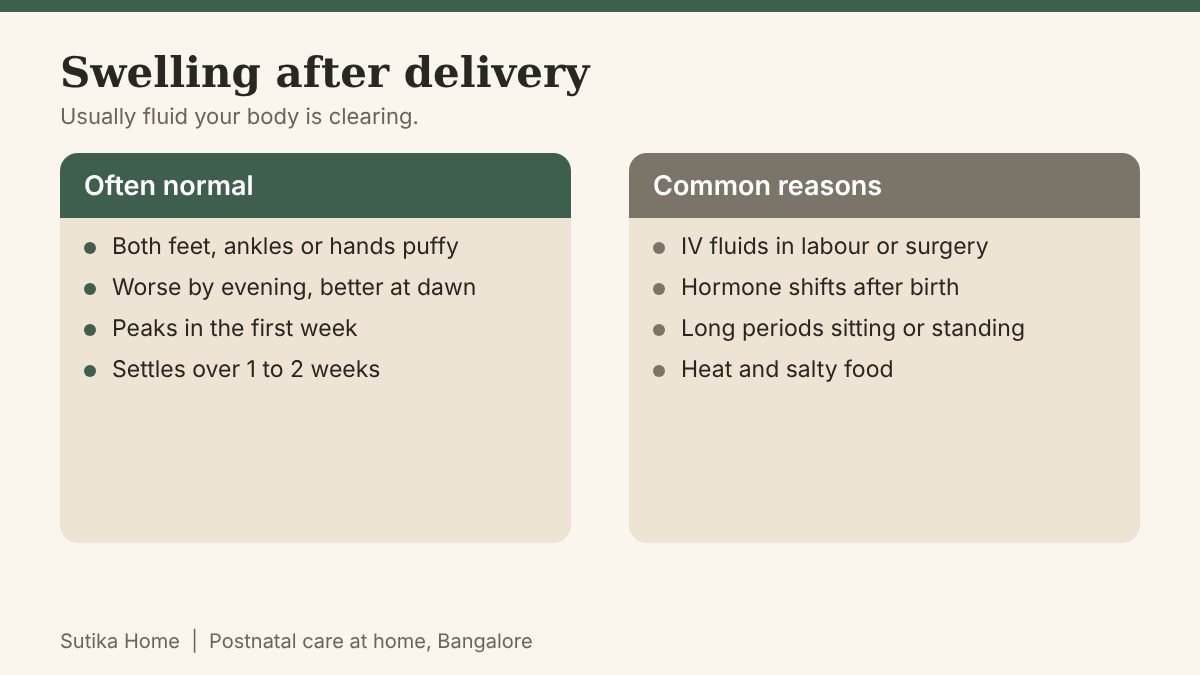
During pregnancy your body makes extra blood and holds extra fluid. After birth, that fluid does not leave instantly. Your kidneys and circulation take days to clear it, and the fluid collects in the lowest parts of the body: feet, ankles and sometimes hands and face. Several things add to it.
- IV fluids given during labour or surgery, especially around a C-section.
- Hormone shifts after delivery, which change how the body handles salt and water.
- Long hours in bed or sitting with legs down, which let fluid pool.
- Hot weather and humid days, which widen blood vessels.
- Salty food, including pickles, packaged snacks and papad, which make the body hold on to water.
- A long labour, pushing for a long time, or a prolonged hospital stay.
Many mothers notice the swelling is worse in the evening, after standing, or after sitting with the legs down, and better in the morning after lying flat.
How long does postpartum swelling last?
For most women the swelling is at its worst in the first few days to a week and settles over the following one to two weeks as the body clears the fluid. Some mothers have mild puffiness for longer, especially in hot weather. You may notice you are passing more urine and sweating more at night, which is your body getting rid of the fluid. That is expected.
Swelling that is getting worse after the first week, does not ease overnight, or comes with other symptoms listed below should be checked rather than waited out.
What helps at home
These simple steps are safe for most mothers. Check with your doctor first if you had a C-section, high blood pressure, heart or kidney problems, or swelling in only one leg.
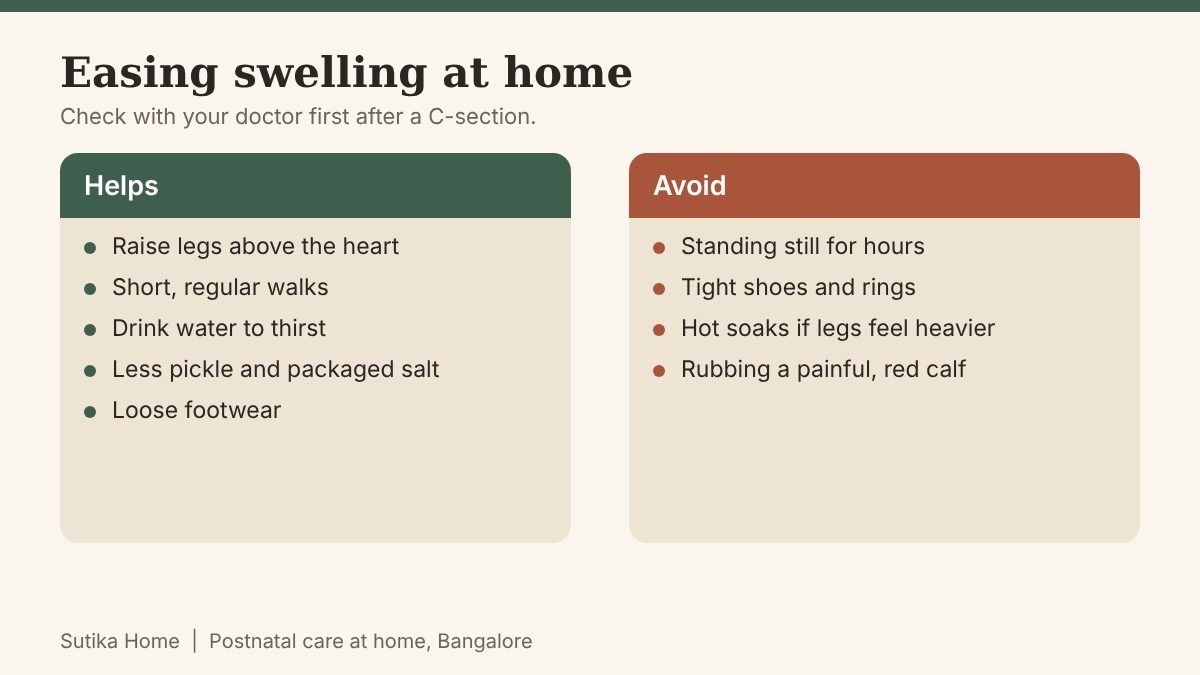
- Raise your legs. Lie down with your feet on pillows above the level of your heart for 15 to 20 minutes a few times a day.
- Walk gently. Short, regular walks move fluid back towards the heart. Walk as far as your doctor says is suitable, and rest when tired.
- Drink water. It seems backwards, but staying hydrated helps the kidneys clear fluid. Follow any limit your doctor has given you.
- Go easy on salt. Cut back on pickles, chips, instant noodles and heavily salted snacks, and choose fresh home-cooked food.
- Wear loose, supportive footwear. Avoid tight straps and shoes. Remove rings before your fingers swell further.
- Avoid standing still for long. Change position often, and avoid sitting with legs dangling or crossed for hours.
- Use a cool compress. A cool, damp cloth on the feet can feel soothing in hot weather.
- Ask about compression stockings. If your doctor has advised them after a C-section or because of clot risk, wear them as directed.
Sleeping with your feet raised on a pillow can help too. Our guide on postpartum sleep has ideas for getting rest in positions that are comfortable.
When swelling is a warning sign
This is the part that matters most. Swelling alone is common, but it can also be the first sign of two serious problems.
Postpartum pre-eclampsia
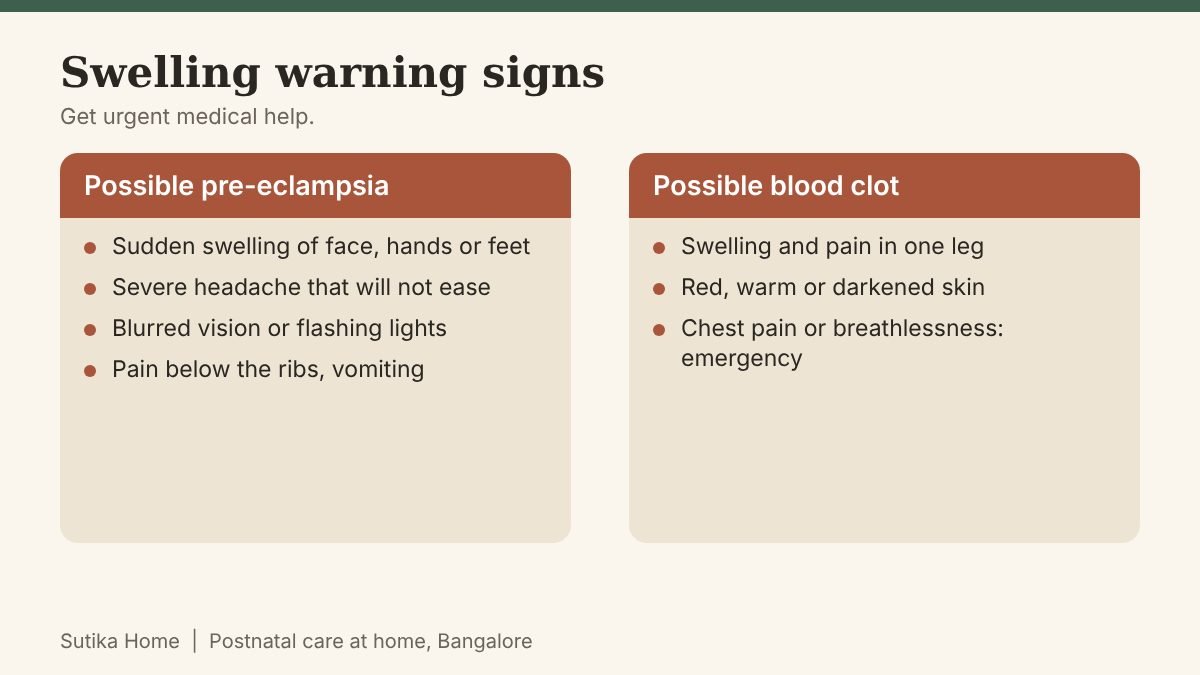
Pre-eclampsia is a condition linked to high blood pressure. Most people think of it as a pregnancy problem, but the NHS notes that it can develop in the days or weeks after the baby is born. Its symptoms include sudden swelling of the face, hands or feet, a severe headache that painkillers do not relieve, vision problems such as blurred sight or flashing lights, pain below the ribs, heartburn that medicine does not relieve, vomiting and feeling very unwell. The NHS advises getting urgent medical help if you have recently given birth and have any of these symptoms.
If you have had high blood pressure or pre-eclampsia in pregnancy, ask your doctor how often to check your blood pressure at home and which numbers should prompt a call. Do not wait for your six-week visit if you feel unwell.
Deep vein thrombosis (DVT)
A blood clot in a leg vein is more likely in pregnancy and in the six weeks after birth, according to the NHS. Signs are throbbing pain in one leg, usually the calf or thigh, swelling in one leg, red, blue or darkened skin around the painful area and swollen veins. Swelling that affects only one leg, especially with pain or warmth, should be checked the same day.
If you have leg symptoms and also feel short of breath or have chest pain, this may mean a clot has travelled to the lungs, which is life-threatening. The NHS advises calling emergency services or going to A&E straight away. Do not drive yourself.
Other causes worth knowing about
- Anaemia can cause puffiness along with tiredness, pale skin and breathlessness. Our guide to postpartum anaemia explains testing.
- Thyroid, heart or kidney problems can cause persistent swelling. Your doctor can check if it does not settle.
- A swollen, painful area around a C-section wound or stitches may be infection, not fluid. See our C-section recovery guide and the article on stitches after normal delivery.
- Medicines can contribute, so tell your doctor about everything you take.
A note on traditional care, oil massage and swelling
In many Indian homes, warm oil massage, warm water soaks and rest are part of the confinement period. Gentle massage and warmth are comforting, and many mothers feel lighter after a session. They are not a treatment for pre-eclampsia or clots, and they should not delay medical help.
Be careful in a few situations. Do not massage a calf that is painful, hot, red or swollen on one side, since pressing on a clot can be dangerous. Tell your therapist about any swelling that appeared suddenly, any severe headache, or any breathlessness before a session begins. Heat, such as hot water soaks, can make leg swelling feel worse in some people, so keep water warm rather than very hot unless your doctor says otherwise. Our guide on postnatal massage at home explains how sessions are adapted, and the article on the herbal bath (vethukuli) explains who should wait.
Your doctor’s advice comes first. If anything about the swelling worries you, ask before the next session.

Food and fluids for swelling
A typical postpartum diet in India is rich in ghee, jaggery and salted dishes. A balanced approach can help. Include fresh vegetables, fruit, dals, curd or buttermilk if they suit you, and potassium-rich foods such as banana, coconut water and leafy greens, unless your doctor has told you to limit potassium. Keep added salt moderate and be mindful of pickles and papads. Our postpartum diet guide has suggestions that fit Indian kitchens. Do not take diuretic herbs or “water pills” without your doctor’s approval, especially while breastfeeding.
How postnatal care at home can help
Swelling is the kind of symptom that is easy to dismiss in a house full of visitors. A trained postnatal helper who sees you every day can notice when your swelling changes, when your headaches get worse, or when you are not walking or eating well, and nudge you to call your doctor. They are not there to diagnose, and they should direct you to medical care when warning signs appear.
At Sutika Home, postnatal care at home includes daily visits from a trained therapist for 7, 14, 28 or 40 days, with traditional therapies and diet guidance, guided by a doctor. Therapies are adapted to your recovery and your doctor’s advice, including after a C-section. To plan your visits, contact our team with your delivery date and area, or read our guide on when to book postnatal care.
Frequently Asked Questions
Is swelling in the feet normal after delivery?
Yes, mild swelling in the feet, ankles and hands is common as the body clears extra fluid. It usually peaks in the first week and settles over one to two weeks. Persistent, worsening or sudden swelling should be checked.
How long does swelling last after a C-section?
It is often a little more noticeable after a C-section because of IV fluids and reduced movement, and it usually eases over a couple of weeks. Follow your surgeon’s advice on walking and compression stockings, and report swelling that is one-sided or painful.
Can swelling after delivery be pre-eclampsia?
Yes, it can. The NHS says pre-eclampsia can develop after birth. Sudden swelling of the face, hands or feet with a severe headache, vision changes, pain below the ribs or vomiting needs urgent medical help.
What if only one leg is swollen?
Swelling in one leg, especially with pain, warmth or redness, may be a blood clot (DVT) and needs same-day medical assessment. Go to emergency care at once if you also have chest pain or breathlessness.
Does drinking more water make swelling worse?
No. Staying well hydrated generally helps your kidneys remove extra fluid. If your doctor has limited your fluids for a medical reason, follow that advice.
Can I get an oil massage when my feet are swollen?
Gentle massage is usually fine for ordinary swelling in both feet, but not for a painful, red or one-sided swollen leg, and not for sudden swelling with headache or vision changes. Ask your doctor first, and tell your therapist.
Do compression stockings help after delivery?
They may help some mothers, particularly after a C-section or if there is a clot risk, but only wear them if your doctor recommends them and shows you how.
Leave a Reply